


Mantova
Mantova is a small city of 50,000 people on a bend of the Mincio river, surrounded on three sides by three artificial lakes. From any approach, the skyline — a cluster of red brick towers, pale stone duomos, the 500-room…
Lombardia is the Italian region that most resembles a small country. It has ten million people (one-sixth of Italy’s population), its own dialect, its own financial centre (the Milan Stock Exchange), more GDP than the entire Netherlands, and, improbably for a region this productive, the best concentration of Italian lakes and some of the country’s most important Renaissance cities. It contains the opera house where Puccini premiered, the largest Gothic cathedral in Italy, the violin-making capital of the world, two UNESCO-listed walled cities, five great Alpine lakes, the original Panettone bakery, and the church that holds Leonardo’s Last Supper. You can spend three weeks here and not exhaust the headline list.
Milan dominates the region as no other Italian city dominates its own. Lombardia beyond Milan, though, is where the unexpected stuff is: Cremona where Stradivari lived, Mantova with its Gonzaga palaces and the Mantegna Camera degli Sposi, Bergamo’s walled Upper Town on its hill, Sabbioneta the “ideal city” that the Italian Wars left half-built, the Valtellina with its terraced vineyards and bresaola. This hub orients you to the whole region. Specific city guides branch off.
Geographically, Lombardia runs from the Alps along the Swiss border down to the flat Po valley floor, about 200 km north-south and 200 km east-west. The terrain has three layers: Alpine (Valtellina, the high valleys above Como and Lecco), pre-Alpine (the lake basins and the Bergamo/Brescia foothills), and plain (the Po valley agricultural heartland — Pavia, Cremona, Lodi, Mantova). The Po river crosses the south of the region; the Adda, Oglio and Ticino are tributaries.
Twelve provinces: Milano, Bergamo, Brescia, Como, Cremona, Lecco, Lodi, Mantova, Monza e Brianza, Pavia, Sondrio, Varese. Plus the “metropolitan city” of Milan which is a separate administrative unit.
Population just over 10 million — Italy’s most populous region — of whom about 4 million are in the Milan metropolitan area. Regional GDP is around €420 billion, which makes Lombardia by itself the 12th-largest economy in the European Union. The region accounts for about 22% of Italian GDP.
Historically, the Langobardi (Lombards) were a Germanic people who invaded Italy in AD 568 from what is now Austria and Hungary. They ruled most of Italy for two centuries; their capital was at Pavia. The name Lombardia comes from them. After the Lombard kingdom fell to Charlemagne in 774, the region fragmented into independent city-states (Milan, Pavia, Cremona, Bergamo, Brescia, Mantua) that dominated the medieval period. The Visconti and then Sforza families consolidated Milan in the 13th-15th centuries; Lombardy then fell under Spanish (1535), Austrian (1714), French (Napoleonic 1796), and Austrian again (1815) rule before joining united Italy in 1859.
Three airports serve Lombardia, all around Milan:
By train: Milan Centrale is the largest railway station in Italy by volume, with direct high-speed service to Rome (3h), Turin (50 min), Venice (2h15), Florence (1h40), Naples (4h40), Paris (7h), Zurich (3h30), Munich (7h). Regional trains serve every provincial capital in Lombardy.
Driving: the A4 Torino-Venezia motorway runs east-west across the region; the A1 Milano-Napoli runs south. Milan itself has a low-emission zone (Area C) for the historic centre that charges non-resident entry; park outside and take the metro.
Milan (Milano) is the regional capital and Italy’s second city — population 1.4 million within the comune, 4 million across the metropolitan area. It’s Italy’s commercial, financial, fashion, design and publishing capital; it hosts the world’s most important fashion weeks and the Salone del Mobile (the world’s biggest furniture fair).
The unmissable list:
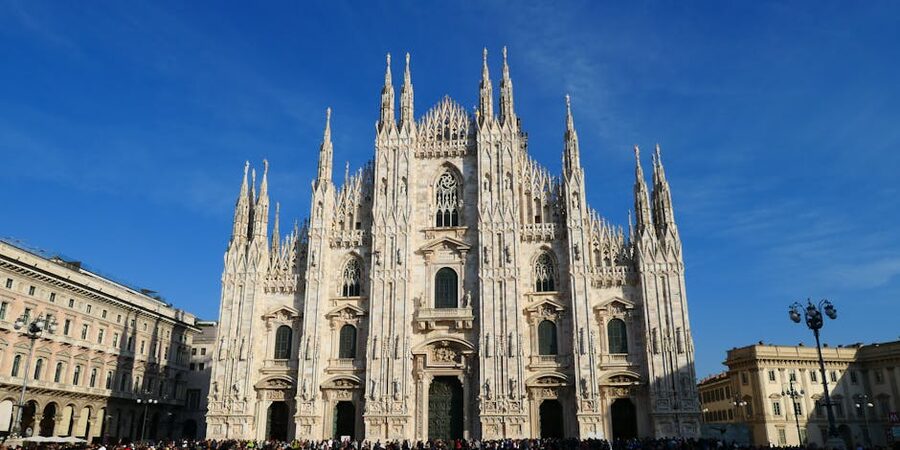
Duomo di Milano — the Gothic cathedral, 600 years in construction (1386-Napoleon), with 3,400 statues and 135 spires on the exterior. The rooftop walk is as famous as the interior — 201 steps (or a lift) to the roof, then a walkway that takes you between the flying buttresses and past the gilded Madonnina on the highest spire. €17 for cathedral + rooftop + archaeological area. Book online.
Galleria Vittorio Emanuele II — the 1877 glass-roofed shopping arcade connecting the Duomo to Piazza della Scala. The oldest still-functioning shopping mall in the world. Free to walk through; Prada’s original 1913 luggage shop is still here.
Teatro alla Scala (La Scala) — the opera house, inaugurated 1778. Verdi and Puccini both had multiple premieres here; Toscanini was the music director for 30 years. Museum tour by day; opera at night if you can get a ticket (book 60+ days ahead, or €13 standing-room in the gallery).
Castello Sforzesco — the Sforza castle, 15th-century, now housing seven different city museums (Egyptian art, musical instruments, furniture, the Michelangelo Rondanini Pietà). Free to enter the castle grounds; €5 combined for all museums.
Santa Maria delle Grazie — the Dominican convent that holds Leonardo’s Last Supper on a refectory wall. UNESCO-listed 1980. Viewing is strictly limited: 25 people per 15-minute slot, €15, tickets released 3 months ahead and sell out in minutes. If you can’t get a ticket, the church itself (with a Bramante-designed apse) is also a significant visit.
Pinacoteca di Brera — the state art gallery, in a baroque palace in the Brera district. Raphael’s Marriage of the Virgin, Piero della Francesca’s Brera Madonna, Caravaggio’s Supper at Emmaus, Mantegna’s Dead Christ, and a dense Lombard painting collection. €15.
Navigli — the canal district, south of the centre. Leonardo helped design the lock system; the two surviving canals (Naviglio Grande and Naviglio Pavese) are now restaurant-and-bar strips. Aperitivo hour 6-9pm.
A full Milan guide is in preparation. See the Milan article when it goes live.
Three of Italy’s four great lakes lie partly or wholly in Lombardia:
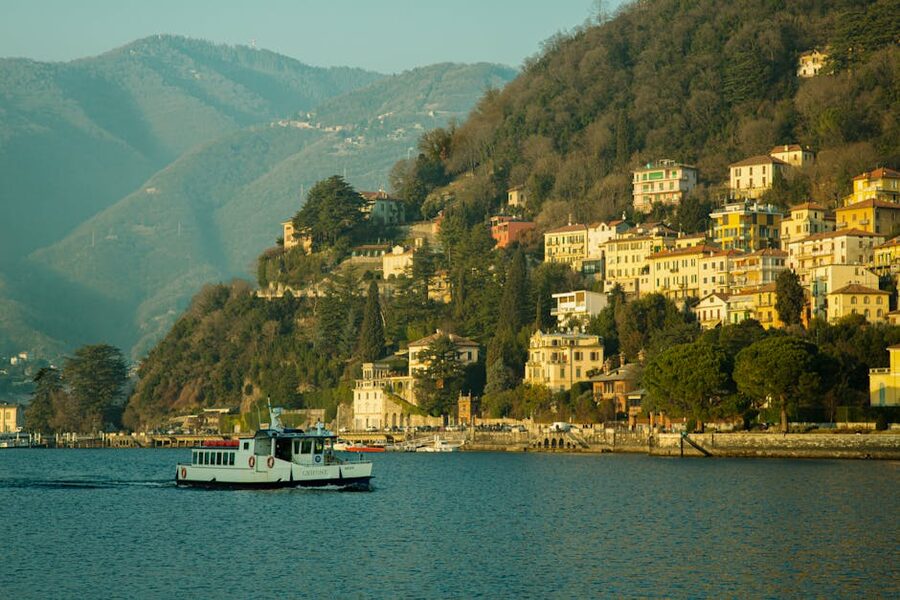
Lake Como (Lago di Como / Lario) — the dramatic one, Y-shaped, 46 km long, mountains rising directly from the shoreline, 410 metres deep. The three anchor towns are Como (at the south-western tip; a proper city, connected by train from Milan in 40 minutes), Bellagio (at the fork of the two branches; the poster-village), and Varenna (eastern shore, reached by ferry from Bellagio in 15 minutes). George Clooney has a villa at Laglio; the Richard Branson villa is at Villa La Cassinella. Most people without private helicopters arrive by train or car from Milan, then use the ferry system to hop villages.
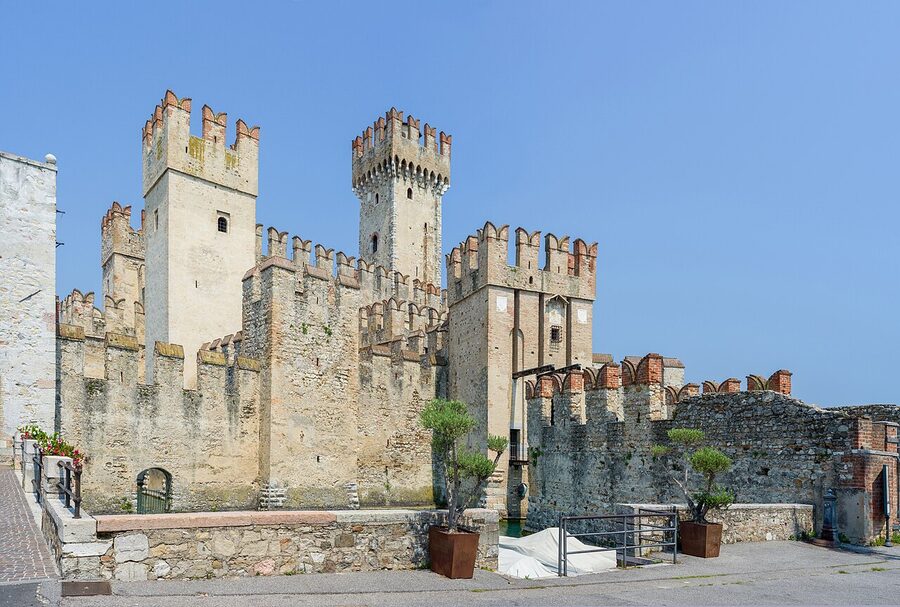
Lake Garda (Lago di Garda) — the largest lake in Italy (370 km²), split between Lombardia (west and south shores), Veneto (east) and Trentino (north). The south end is wide, flat and warm; the north end is narrow, Alpine and windy. Key Lombard stops: Sirmione (a walled promontory town on the south shore, with a Scaligero castle jutting into the lake — see below), Salò, Gardone Riviera (home of the Vittoriale degli Italiani, Gabriele D’Annunzio’s bizarre museum-home), Desenzano del Garda.
Lake Maggiore (Lago Maggiore / Verbano) — the second-longest lake in Italy (65 km), split between Piemonte (west), Lombardia (east), and Switzerland (north). The Lombard side has Luino (weekly market, Fridays, one of the largest in Italy) and the eastern shore villages. The Borromean Islands — Isola Bella, Isola Madre, Isola dei Pescatori — are technically Piemonte but accessible from Lombard ferries.
Lake Iseo (Sebino) — smaller, less touristy, with the wine region of Franciacorta (sparkling wine, Italy’s best méthode-traditionnelle) on its south shore and Monte Isola — the largest inhabited lake island in Europe — in the middle. Served by ferries from Iseo and Sulzano.
Lake Lugano (Ceresio) — mostly in Switzerland, but one arm comes into Lombardy (around Porlezza).
See the Italian Lakes hub for more on each.
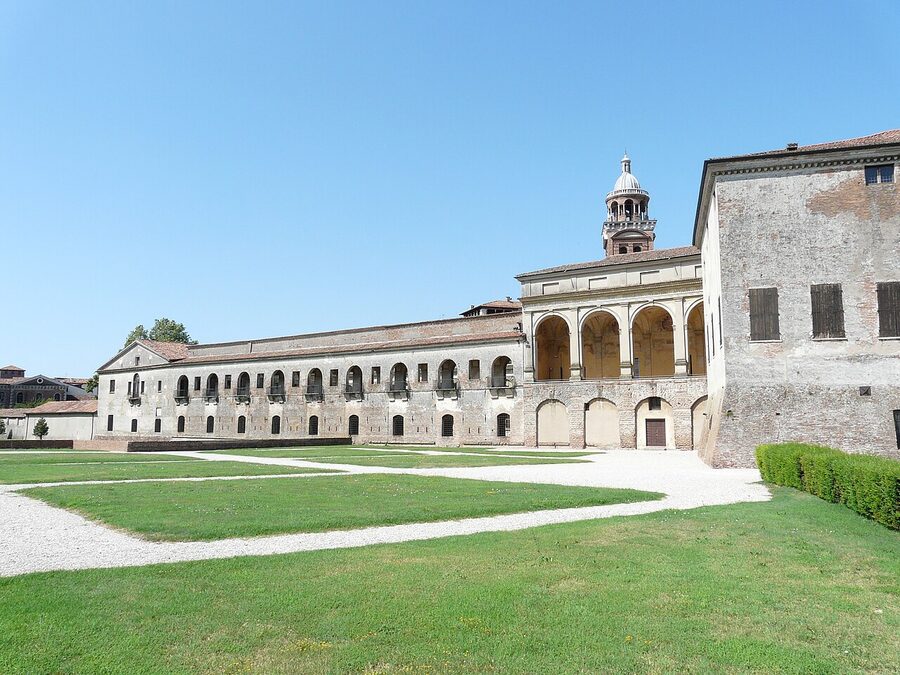
Mantova (Mantua in English) is a small city of 50,000 people on a bend in the Mincio river, surrounded by three artificial lakes (Superiore, di Mezzo, Inferiore) that give the place a water-on-three-sides geography unique in central Italy. UNESCO World Heritage Site 2008 (shared with nearby Sabbioneta). The Gonzaga family ruled from 1328 to 1707 — almost four centuries — and their patronage built one of the great Renaissance courts in Italy, which attracted Mantegna, Giulio Romano, Rubens, and Claudio Monteverdi (who invented modern opera here with L’Orfeo in 1607).
See the full Mantova guide for the deep dive. The short version: the Palazzo Ducale with Mantegna’s Camera degli Sposi (the first Renaissance illusionistic ceiling), Palazzo Te with Giulio Romano’s Sala dei Giganti (Mannerist insanity), Alberti’s Sant’Andrea, the tortelli di zucca, the Lambrusco.
Virgil was born in a village near Mantua in 70 BC; the town takes the fact seriously. There’s a bronze statue of him in Piazza Virgiliana.
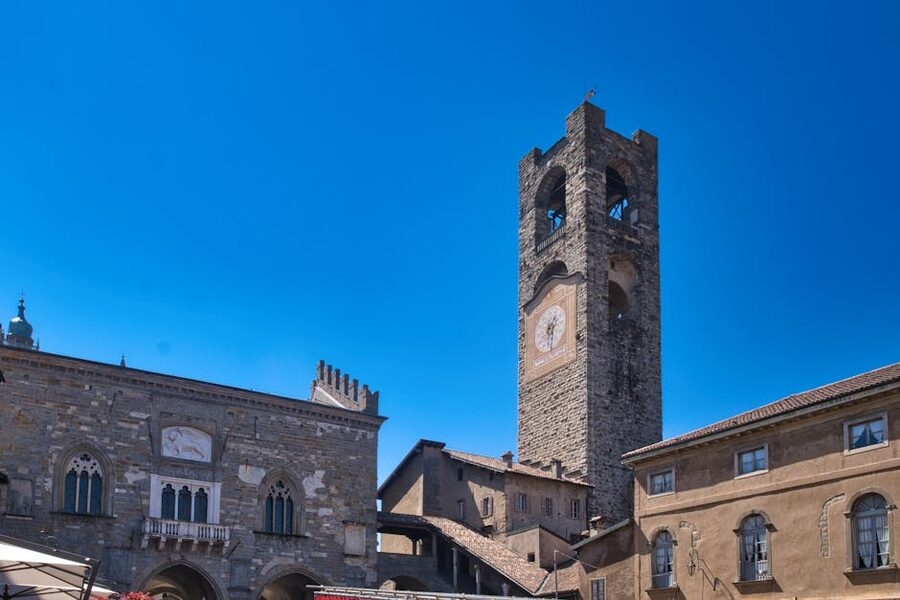
Bergamo splits unusually into two cities. Città Alta (Upper Town) is the medieval walled centre, sitting on a rocky hill 300 metres above the plain, reached by funicular from the lower city. Città Bassa (Lower Town) is the modern city spread on the flat ground below. This is one of the most dramatic urban splits in Italy — you can stand in Piazza Vecchia in the Upper Town and look down at the whole of the Lower Town, the Lombard plain, and on a clear day the Alps beyond.
The Città Alta was enclosed by 5.5 kilometres of Venetian walls built 1561-1588; UNESCO-listed these in 2017 as part of the Stato da Mar fortifications. The walls are walkable. Inside them: Piazza Vecchia, the 12th-century Cappella Colleoni (Bartolomeo Colleoni’s funerary chapel, one of the most elaborate Lombard Gothic-Renaissance buildings), Basilica of Santa Maria Maggiore (Romanesque, with a Tintoretto crucifix and the tomb of Donizetti), the Palazzo della Ragione.
Bergamo is a day trip from Milan (50 min by train) or a 2-3 night standalone trip. Good food scene — the city is the birthplace of casoncelli (a local stuffed pasta) and home to the Donizetti opera festival each November.
Cremona is where violins come from. Andrea Amati invented the modern violin here around 1555; his grandson Nicolò taught Antonio Stradivari, who made about 1,100 stringed instruments between 1680 and 1737 — of which perhaps 650 survive and now fetch €3-20 million at auction. Stradivari’s workshop was on Via del Coltellaio (now Piazza Marconi), and three of his best violins are on permanent display at the Museo del Violino (€10, audio guide included, hourly demonstrations when a resident violinist plays the instruments — one of the most emotionally affecting museum experiences in Italy).
The violin-making tradition continues: Cremona has 150+ active workshops (liutai) still hand-making instruments, and UNESCO inscribed the craft on the Intangible Heritage list in 2012. If you’re a player (or adjacent), you can visit many of the workshops by appointment.
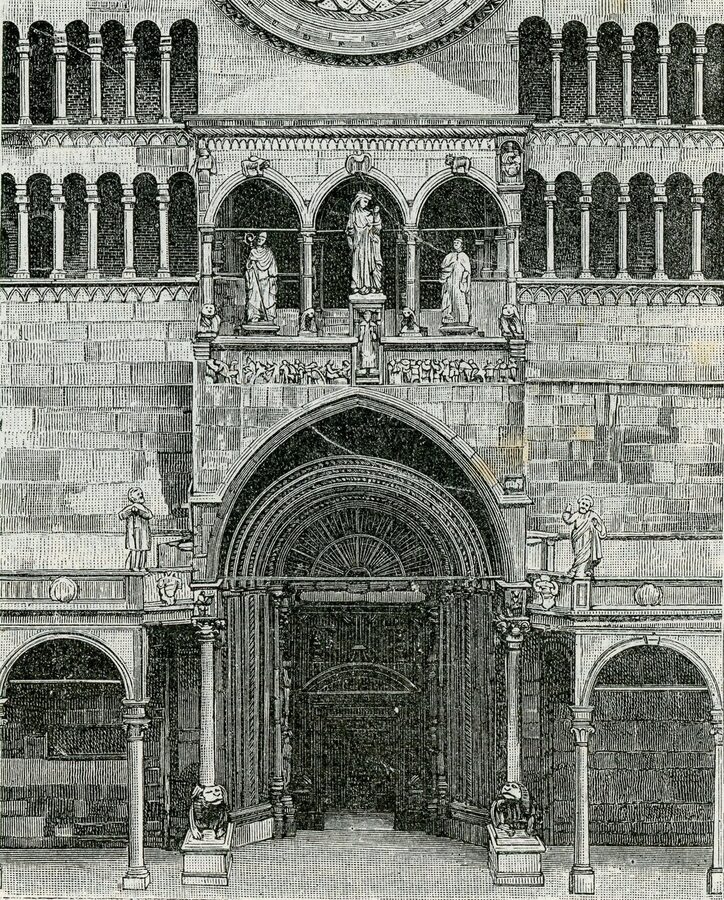
The city itself is compact. Piazza del Comune with the Duomo (Romanesque, striped marble façade, huge astronomical clock), the Torrazzo bell tower (112 m, tallest medieval brick tower in Europe, climbable for €5), the Baptistery, the Palazzo Comunale. And one of the best food scenes in Lombardia — torrone (nougat) was invented here in 1441 for the marriage of Francesco Sforza to Bianca Visconti; mostarda di Cremona (candied fruit in mustard syrup) is the local condiment to boiled meats.
Thirty kilometres south of Mantua is Sabbioneta, a 2,600-person walled village that was, in the late 16th century, an attempt at a perfect Renaissance city. Vespasiano Gonzaga Colonna (1531-1591) built it from scratch between 1556 and his death — commissioning a regular street grid, a ducal palace, a theatre (the Teatro all’Antica, the first purpose-built permanent theatre in the modern world), a gallery, a basilica, city walls, and the housing for his courtiers. After he died and the court moved away, the town stopped growing. What’s now there is essentially what Vespasiano built.
UNESCO added Sabbioneta to the Mantua-Sabbioneta listing in 2008. The town is a one-afternoon visit, with a combined ticket covering the ducal palace, the Galleria degli Antichi, the Teatro all’Antica, the Casino di Sabbioneta, and the synagogue. €14 for everything.
Pavia — the old Lombard capital (before Milan took over), about 35 km south of Milan. The city centre is compact, with the 12th-century Duomo, the Romanesque-Lombard Basilica di San Michele Maggiore, and the Ponte Coperto covered bridge over the Ticino.
The real draw is the Certosa di Pavia — a 14th-century Carthusian monastery 8 km north of the city, commissioned by Gian Galeazzo Visconti in 1396 as a family mausoleum. The marble façade is one of the most elaborate pieces of Italian Renaissance architecture, and the monastery’s small and large cloisters are unusually intact. €5 entry, closed Mondays, about an hour out of Milan by train plus a short bus.
The Valtellina is the long Alpine valley that runs east-west along the northern border of Lombardia, wedged between the Alps and the Prealps. The main town is Sondrio, but the reason to come is the food and the mountain landscape: the Valtellina Superiore DOCG Nebbiolo wine from terraced vineyards cut into the south-facing valley wall (some of the most extreme vertical viticulture in Europe); bresaola della Valtellina IGP (air-dried salt-cured beef); pizzoccheri (buckwheat pasta baked with cabbage, potatoes, cheese and butter); Bitto and Casera mountain cheeses.
For walking, the Stelvio National Park covers the north-eastern corner of the Valtellina — the third-largest protected area in Italy, with the 2,758 m Passo dello Stelvio road (one of the great Alpine driving passes, featured repeatedly on Top Gear and in the Giro d’Italia) crossing its eastern boundary.
Lombardia has some of Italy’s most distinctive regional food traditions, heavily dairy- and meat-influenced:
Risotto alla Milanese — saffron risotto, made with beef marrow, onion, white wine, chicken stock, saffron, and finished with Parmigiano. The only rice dish in Italy that contains (and requires) saffron.
Ossobuco — veal shanks, sliced crosswise and braised slowly with white wine, stock and aromatic vegetables, served with gremolata (chopped parsley, garlic, lemon zest) on top. Traditionally paired with risotto alla milanese (the meat and the rice in the same meal — pasto unico).
Cotoletta alla Milanese — a bone-in veal chop, breaded and fried in butter. The Milanese vigorously dispute the Austrians’ claim that the Wiener Schnitzel came first.
Pizzoccheri — Valtellina buckwheat pasta, baked with Savoy cabbage, potatoes, melted Casera cheese and butter. Heavy, warming, essential in winter.
Polenta — base of a lot of Lombard food. Eaten soft with stews, or grilled firm with melted cheese.
Panettone — the tall domed Christmas bread. Invented in Milan (the legend traces to a 15th-century Sforza wedding). The industrial versions are in every supermarket; for the real thing, find a Milanese pastry shop (Cova, Marchesi, Cucchi) that still bakes them in-house December.
Gorgonzola DOP — the blue-veined cow’s milk cheese, from around the town of Gorgonzola east of Milan. Comes in dolce (sweet, mild, spreadable) and piccante (mature, sharp) versions. The DOP zone covers Lombardia and Piemonte.
Wines:
The lakes are best in May-June (warm enough to swim, not too crowded) or September-October (autumn colour, fewer tourists). July-August is peak and expensive. November-March closes most of the lake-village tourism infrastructure, though Milan remains fully operational year-round. Winter is ski season in the Valtellina (Bormio, Livigno, Aprica) and Valcamonica (Passo del Tonale).
Milan’s best months are April-May and September-November. Avoid August when the city partially empties for the summer holiday. The Salone del Mobile (April, design fair) and Milan Fashion Week (Feb/Sept) make hotel prices spike and rooms scarce.
Short trip (3-4 days): Milan only — enough for the Duomo, Last Supper, La Scala, Brera, and one lake day trip.
Standard trip (7-10 days): Milan 3 nights + Lake Como 2 nights + Bergamo or Mantua 1-2 nights + Cremona day trip.
Full trip (2 weeks): all of the above plus Sabbioneta, Pavia + Certosa, Valtellina for food-and-hiking, and a couple of nights on Lake Garda’s Lombard shore.
Individual guides: Milan, Mantova, Bellagio, Sirmione, Bergamo, Cremona as they go live.
Mantova is a small city of 50,000 people on a bend of the Mincio river, surrounded on three sides by three artificial lakes. From any approach, the skyline — a cluster of red brick towers, pale stone duomos, the 500-room…