
Valle d’Aosta
Valle d’Aosta is the smallest region of Italy, the highest, and the only one where the regional language is officially French. It has three of the four highest mountains in the Alps (Mont Blanc, Monte Rosa and the Matterhorn all wholly or partly on its borders), one of Europe’s earliest national parks (Gran Paradiso, 1922), more than a hundred surviving medieval castles, and a population — about 125,000 — smaller than that of a medium-sized Italian provincial city. It has been a trade corridor between Italy and northern Europe for two thousand years, which is why the Romans built a capital here and why the Dukes of Savoy stacked the valleys with fortresses. It is now the place Italians go to ski, and the place foreigners keep missing because they fly into Milan and turn right.
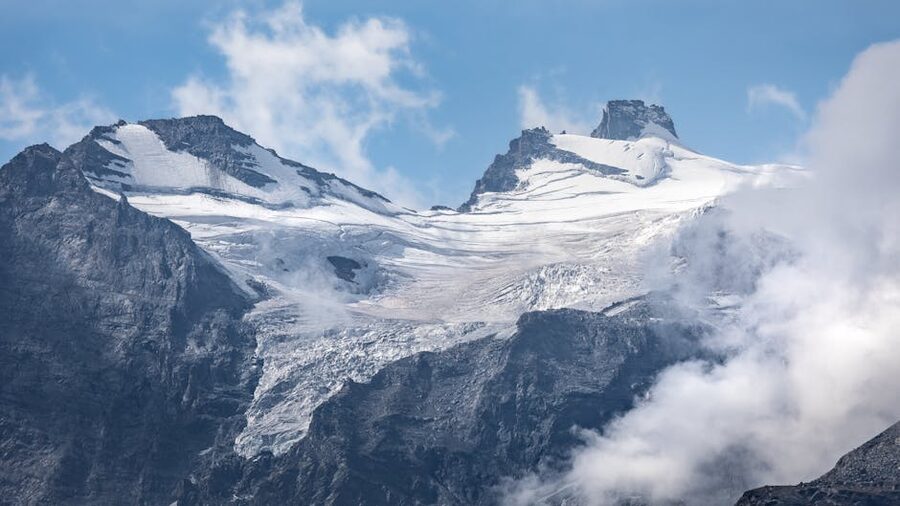
The region is physically small — 3,260 square kilometres, about twice the size of Greater London — but dense with difficult terrain. Everything is uphill or downhill. Thirty-nine of the Italian peaks above 4,000 metres are here. The floor of the main valley (the Valle Centrale, which runs east-west along the Dora Baltea river) sits at 300-700 metres; from there, a dozen tributary valleys head north and south up into the mountains, each with its own micro-climate, dialect, cheese, and list of castles. A road trip through Valle d’Aosta is essentially a series of detours up the side valleys, followed by a long drive along the central one. In under two hours of driving, you can move from chestnut forest at 400 metres to a 4,000-metre glacier. This is the thing the region is selling.
What Valle d’Aosta actually is
Officially: the Regione Autonoma Valle d’Aosta / Région Autonome Vallée d’Aoste. One of the five Italian regions with special autonomous status (along with Sicily, Sardinia, Trentino-Alto Adige and Friuli-Venezia Giulia). Autonomy here means the region runs its own health and education systems, has a guaranteed French-speaking school track, and keeps a larger share of local taxes than a standard Italian region — a recognition of the historical French and Franco-Provençal identity of the valley’s people.
The population is bilingual in law and in signage. In practice, Italian is the working language for most day-to-day business, French is used in education and public administration, and a family of Franco-Provençal dialects — collectively called Patois (or francoprovenzale valdostano) — is spoken in the villages. In the far north-east, in two small enclaves around the Monte Rosa valleys (Gressoney, Issime, Champoluc), a fourth language is spoken: Walser German, brought by medieval settlers from the Upper Valais who crossed the glaciers in the 12th-13th centuries. You’ll see all four languages on local signs.
Historically: settled by the Celtic-Ligurian Salassi tribe before the Romans arrived, conquered under Augustus in 25 BC, capital founded as Augusta Praetoria Salassorum (modern Aosta), Roman road system extended through the St Bernard Passes to Gaul and Helvetia. The Lombards took it in the 6th century; the Franks in 774; then the House of Savoy from 1032, continuously for nearly 900 years. The Savoys were the ones who built the castles. Unified Italy arrived in 1860, and modern regional autonomy followed the 1948 Italian Constitution.
Getting there
There is no major airport in Valle d’Aosta. The regional airport of Aosta-Corrado Gex exists but operates only private charter and occasional seasonal routes. The practical airports are:
- Turin (TRN) — 115 km, 1h30 drive. Best domestic and European connectivity.
- Milan Malpensa (MXP) — 150 km, 2 hours. Best intercontinental.
- Geneva (GVA) — 130 km, 1h45 via the Mont Blanc Tunnel. Best for US/UK flights and often the cheapest option.
By train: the regional line from Turin to Aosta is an hourly regional train, 2 hours, €10-15. The Aosta station is in the centre of town; from there, the regional Arriva buses serve every side valley. The Italian high-speed network doesn’t reach Valle d’Aosta.
By car: the A5 Torino-Aosta motorway is the main spine. The Mont Blanc Tunnel (11.6 km, €54 one-way for cars) connects Italy to Chamonix in France — essential if you’re crossing to/from France in winter. The Great St Bernard Tunnel (5.8 km, €32) connects to Switzerland; the summer-only Great St Bernard Pass itself (2,469 m) is open roughly mid-June to mid-October and is a beautiful drive if you’ve got a non-fragile vehicle.
The mountains
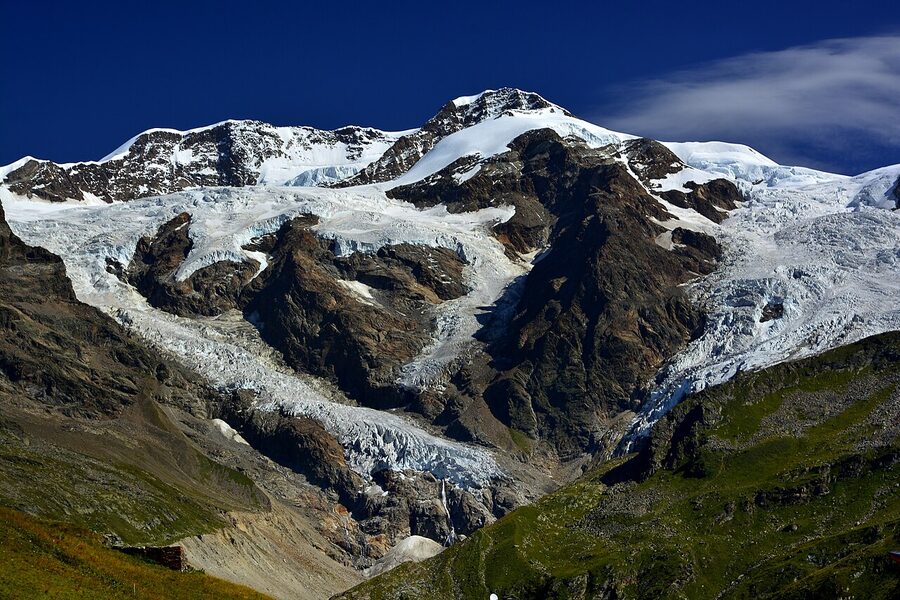

The region has four peaks over 4,000 metres that you can see from the floor of the main valley or one of the side valleys:
Mont Blanc / Monte Bianco — 4,808 m, the highest mountain in western Europe, on the French border. The Italian side is reached from Courmayeur. The Skyway Monte Bianco cable car from Pontal d’Entrèves takes you to the Punta Helbronner observation platform at 3,466 m in a glass-floored rotating cabin (one of the most scenic cable cars in Europe; €60 return, book online in summer, operates year-round).
Monte Rosa — 4,634 m, the second-highest in the Alps, on the Swiss border. Accessed from the Gressoney and Champoluc valleys on the eastern edge of the region. The Monterosa Ski area is the largest in Valle d’Aosta; in summer it’s the base for serious high-altitude hiking and the Monte Rosa Hut climb.
The Matterhorn / Il Cervino — 4,478 m, on the Swiss border. The Italian side is reached from Breuil-Cervinia, a purpose-built ski town at 2,050 m. Cross-border ski-lift link to Zermatt in Switzerland is one of the largest international ski areas in the world. The Matterhorn’s distinctive pyramid is best photographed from the Italian side, which is less publicised than the Swiss side but equally spectacular.
Gran Paradiso — 4,061 m, the only 4000+ peak entirely within Italy. The name comes from the sight of the valley’s wild ibex herds in early 20th-century French travel literature. The mountain is at the centre of the Parco Nazionale del Gran Paradiso (see below). Reached from Cogne (south) or Valsavarenche (south-west).
Gran Paradiso National Park
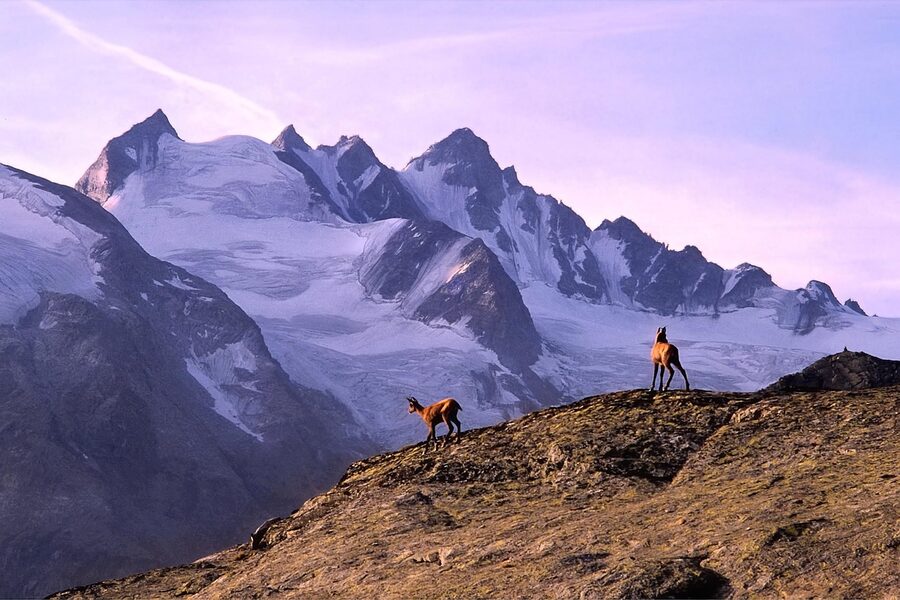
The Parco Nazionale del Gran Paradiso was founded in 1922 — Italy’s first national park, and among the oldest in Europe. It covers 710 square kilometres of the southern Valle d’Aosta (plus a bit of Piedmont), centred on the Gran Paradiso massif. Its original purpose was the protection of the Alpine ibex (stambecco), which had been hunted to about 60 animals in the late 19th century. King Victor Emanuele II created a royal hunting reserve here in 1856; his grandson Victor Emanuele III donated the whole reserve to the Italian state in 1922, and it became the national park.
The park is the best place in western Europe to see wild ibex at close range. In high summer (July-September) the herds come down to lower meadows around Valnontey (above Cogne) and are easily spotted. Bring binoculars. Park rangers lead guided walks from the visitor centres at Cogne, Valnontey, Rhêmes-Notre-Dame, Valsavarenche — all free.
Key entry points:
- Cogne — the main gateway, at 1,540 m. Village with hotels and restaurants. Good for families, flatter walks.
- Valnontey — 2 km from Cogne, hamlet at the end of the road at 1,650 m. Start of the Rifugio Vittorio Sella trail, one of the classics.
- Valsavarenche — more serious, less visited. Start of the Gran Paradiso summit climb for experienced mountaineers.
- Rhêmes-Notre-Dame — remote, fewer visitors. Good for high-altitude walkers.
The castles
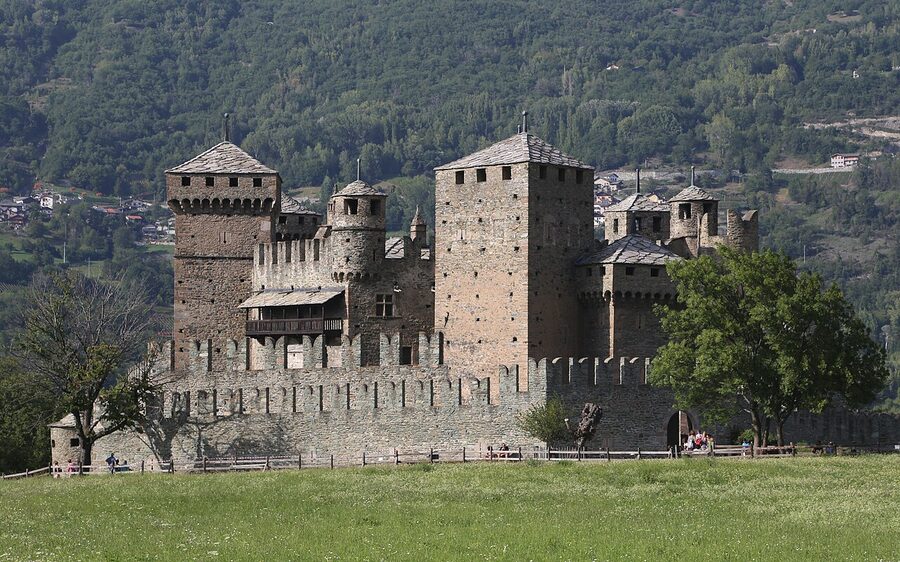

Valle d’Aosta has the densest concentration of medieval castles in Italy. Somewhere between 100 and 130, depending how you count towers, watchpoints, fortified farmhouses. Every side valley had its own lord, and the geography encouraged defensive building — a castle on a bluff above a narrow valley can block traffic completely. Most are owned by the regional government and either open as museums, restored as wedding venues, or sitting quietly as scheduled ruins.
Five worth visiting (all open to the public, on or near the A5):
Castello di Fénis — 14th-century, the family castle of the Challant family, with double curtain walls, five round towers, and a spectacular frescoed inner courtyard (Gothic International style, by Giacomo Jaquerio and workshop). €8. Open daily.
Castello di Issogne — 15th-century, the Issogne Challant branch’s residence, more palatial than defensive. The famous pomegranate fountain in the central courtyard and the kitchen frescoes (scenes of daily life in the 1490s) are the highlights. €8.
Forte di Bard — 19th-century Savoy fortress rebuilt on the site of the medieval original which Napoleon destroyed in 1800. Now the Museo delle Alpi — a large modern museum of Alpine natural and human history, plus a rotating exhibition space. €9, combined ticket €13. The fortress sits above the Bard village and is accessible by a series of panoramic elevators up the cliff.
Castello di Verrès — 14th-century, compact and defensive (it was a real military fortress, not a palace), with a 13th-century fortified courtyard. Good complement to Fénis.
Castello Savoia di Gressoney — the Savoy royal family’s Alpine summer residence, built 1899-1904 in a neo-medieval style for Queen Margherita. Gardens reopen each summer, the interior has its original Art Nouveau decoration, and the view of Monte Rosa from the tower is as good as from any ski lift. €5.
The Roman heritage
Aosta itself — the regional capital — has the most extensive Roman archaeological remains in the north of Italy after Verona. The city was founded in 25 BC by Augustus over the campsite of a Roman legion that had defeated the local Salassi, and it kept its regular grid plan, Roman walls, theatre, forum, cryptoporticus and (inspirational) Arch of Augustus. The full guide is at the Aosta article.
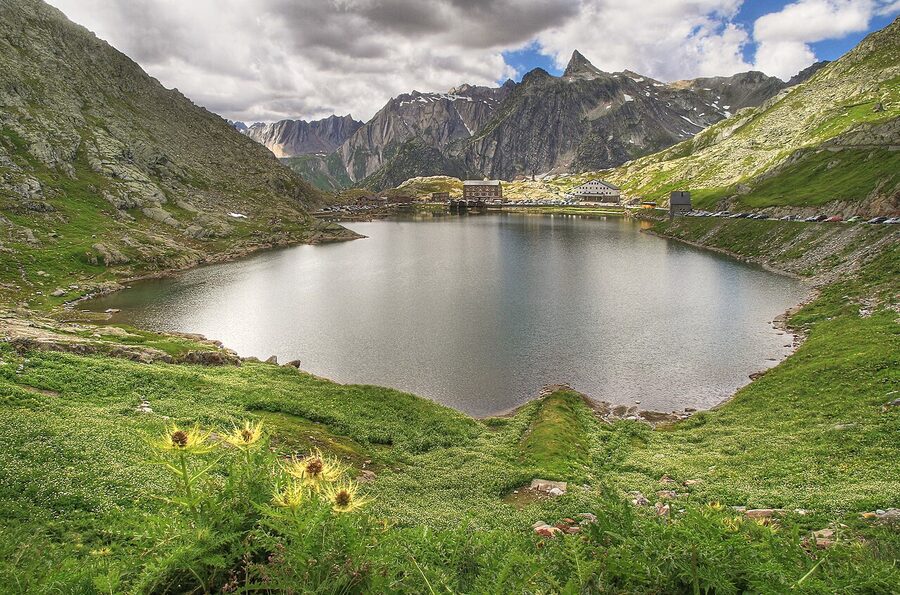

Outside Aosta: the Romans laid a road network through the two St Bernard passes (Great and Little) to connect Italy with Gaul and Helvetia. Ruins of Roman roadbed, bridges and staging posts are scattered through the valley. The Great St Bernard Pass itself is a late-Roman engineering achievement and a place of continuous pilgrimage, trade and crossing since at least the 3rd century AD. The 11th-century hospice at the summit is where St. Bernard of Menthon set up a monastery to rescue travellers; the same monks, over the centuries, bred the breed of dog that now carries his name. The dogs are still there.
Food and wine
Valle d’Aosta food is mountain food — hearty, dairy-heavy, cold-weather. It shares much with French Savoy and Swiss Valais cuisine rather than with the rest of Italy. Five things to eat and one to drink:
Fontina DOP — the regional cheese. Raw cow’s milk, unpasteurised, from cows that graze in the Alpine summer pastures above 1,500 m. Semi-soft, pale yellow, strong-smelling but mild-tasting. The AOP (PDO) is tightly regulated: only cows of the three local breeds (Valdostana Pezzata Rossa, Pezzata Nera, Castana), only milked twice daily, only on farms within the region. Matured in the caves of Valpelline or Cogne for at least 80 days. It’s the base for fonduta (the Valdostan fondue, heavier on cheese, with egg yolks and truffle if you’re in season), for seupa à la vapeulenentse (bread-and-fontina soup) and for stuffed polenta.
Carbonade — the regional beef stew, cooked in red wine (traditionally the local Cornalin or Donnas wines), with juniper berries, cinnamon and cloves. Served with polenta concia — polenta cooked until it absorbs a block of fontina. The combination is the defining winter meal.
Jambon de Bosses — a PDO cured ham from the village of Saint-Rhémy-en-Bosses on the approach to the Great St Bernard Pass. Aged 12-18 months in mountain air with juniper and thyme; sweeter and less salty than Parma prosciutto, distinctly herbal.
Lard d’Arnad DOP — a pale cured pork lard from the village of Arnad, aged in wooden boxes with herbs and salt for at least 3 months. Sliced thin, eaten raw on toasted rye bread. Central Italian charcuterie’s unsung hero. Works surprisingly well with a glass of local white wine.
Tegole — the regional biscuit, thin, crisp, almond-studded, named for their resemblance to roof tiles. Good with coffee at any altitude.
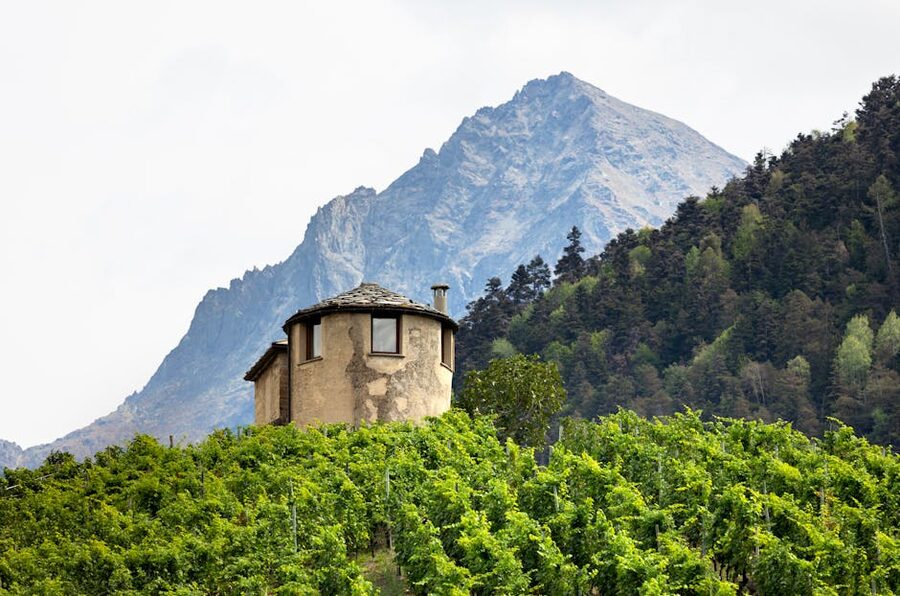
Valle d’Aosta DOC wines: the region produces small quantities of very specific wines from indigenous grape varieties that grow almost nowhere else. Petit Rouge, Cornalin, Fumin and Vien de Nus are the four main red varieties — mostly unknown outside the region and well worth the detour to a Cave Cooperative (Cooperative). The whites include Prié Blanc (used for the Blanc de Morgex et de La Salle, from Europe’s highest vineyards at over 1,000 m) and Petite Arvine (imported from Swiss Valais in the 20th century, now thriving on the Italian side). The Cave Mont Blanc at Morgex, the Cave du Vin Blanc de Morgex, and the Cooperativa di Aymavilles are the three easiest cellar visits.
Don’t leave without a bottle of Genepy — the regional herbal digestif, made from macerated Artemisia genepi (a mountain wormwood), bitter, herbal, yellow-green, 40% alcohol. Drunk neat after a heavy meal. €20-30 for a bottle from a named producer (St-Roch, Bordiga, Lo Dzeut).
Skiing
Valle d’Aosta is Italy’s top ski region by pure volume. Five main areas:
- Courmayeur — under Mont Blanc, 100 km of pistes, elegant, expensive, well-maintained. Accessible from France via the Mont Blanc Tunnel.
- Breuil-Cervinia — under the Matterhorn, linked to Zermatt in Switzerland via lifts, 360 km of combined pistes. The highest ski area in Europe; skiable 10 months a year on the Plateau Rosa glacier (above 3,500 m).
- Monterosa Ski — covering the Gressoney, Champoluc and Alagna valleys, 180 km of pistes, famously large and less crowded than Courmayeur.
- La Thuile — cross-border ski area linked to La Rosière in France, 160 km, family-friendly pricing.
- Pila — above Aosta, small and accessible by cable car from the city, 70 km of pistes. Ideal day-trip skiing.
Ski season typically runs late November to late April, with the Plateau Rosa above Cervinia open into summer. Prices are on the higher end of the Italian range. The region’s Skipass Aosta Valley covers all five areas on a combined pass (€370 for a week in peak season).
When to visit
Valle d’Aosta is a two-season destination in its own way.
Winter (December-March) is the ski season. Villages are full, hotels are expensive, the atmosphere is Alpine-resort. Best for skiing, for winter hiking with snowshoes, and for the fonduta-by-the-fire experience.
Summer (June-September) is the hiking and nature season. Alpine meadows are in full wildflower by mid-June, the ibex herds are visible in Gran Paradiso, the passes are open, the cable cars run. Temperatures in the main valley hit 22-28°C in July-August, much cooler at altitude. This is my preferred window — the crowds are modest, the views are staggering, and the food tastes better at altitude.
Spring and autumn are the shoulder seasons: mountain weather can be unpredictable, ski lifts are mostly closed, some restaurants and hotels in the ski villages close completely. Aosta itself stays open year-round.
How to put it together
For a week: Aosta (2 nights), Cogne for Gran Paradiso (2 nights), Courmayeur for Mont Blanc (2 nights), leave the last night flexible for Cervinia or Gressoney depending on the weather.
For a long weekend: Aosta + one side valley (Cogne in summer, Courmayeur or Cervinia in winter).
For a driving road-trip: use the A5 motorway as the spine and detour up one side valley per half-day. Fénis and Issogne castles on the way up the valley; Forte di Bard near the regional entry; Cogne as the mid-valley overnight.
Individual city guides: Aosta (the capital), and guides to Courmayeur and Cogne as they go live.