
The Cinque Terre is fifteen kilometres of cliff between two small seaside towns — Levanto in the west and Portovenere in the east — broken by five fishing villages that the sea has been trying to swallow for 800 years. The villages are Monterosso al Mare, Vernazza, Corniglia, Manarola and Riomaggiore. They are fishermen’s settlements turned wine-growers’ settlements turned tourist destinations. They are the single most photographed piece of Italian coast. They are also, in high season, some of the most overrun. Both things are true. Handling that tension is the whole art of visiting well.
I first came in 2004 when you could walk the coastal trail without a ticket and eat an anchovy plate on the Vernazza quay for nine euros. By 2019 the ticket was twelve euros, the plate fifteen, and the queue for the Manarola photo-spot went around the corner. I still recommend going. The villages — at 7am, or in November, or for dinner after the last train has taken the day-trippers back to La Spezia — are still everything people say they are. You just have to be smart about when.
In This Article
What the Cinque Terre actually is
Five villages, perched on the steep Ligurian coast, linked since antiquity by a network of mule paths and since 1874 by a railway cut through the mountains behind. All five have populations under 1,500 permanent residents (Riomaggiore, the biggest, has about 1,300; Corniglia, the smallest, barely 250). The entire coast plus the hinterland behind — 38 square kilometres — was inscribed as a UNESCO World Heritage Site in 1997 and designated the Parco Nazionale delle Cinque Terre in 1999. Two protections, same area, coordinated management.
The villages were founded in the 11th-13th centuries by inland farmers who came down the mountain to fish. Each one picked a small cove and stacked its houses vertically up the hillside behind — which is why the silhouette of all five is the same (tall narrow buildings, pastel-coloured, clinging to a slope). The surrounding hillsides were terraced with dry-stone walls over generations of patient work; the cumulative length of those walls, if you laid them end to end, would reach to China. They held the thin topsoil in place and grew the grapes for the local wine.
From the 15th century through the 19th, the Cinque Terre was poor — inaccessible by road, reliant on the sea for most trade, depopulated when mainland industrial towns offered wages. The 1870s railway changed the economy; two bigger shocks came later. The 2011 floods of 25 October killed 13 people in Monterosso and Vernazza and destroyed parts of both towns; major reconstruction took five years. The slower, continuing shift is tourism — day-trippers going from 200,000 a year in the 1990s to 3 million now. The National Park’s rangers spend most of their time on crowd management.
Getting there
The villages are served by the Levanto-La Spezia regional railway line, part of the main Genoa-Pisa route. Trains stop at all five villages (Monterosso, Vernazza, Corniglia, Manarola, Riomaggiore) at 15-30 minute frequency in summer, every 30-60 minutes off-season. You don’t need to transfer. A single ride between adjacent villages takes 3-4 minutes; end-to-end (Monterosso to Riomaggiore) is about 20 minutes.
The two practical base towns are La Spezia (to the east; the larger, with direct connections to Milan, Genoa, Rome, Pisa) and Levanto (to the west; smaller, prettier, less convenient for connections but a superior base). La Spezia Centrale station has a dedicated “Cinque Terre Express” service that runs end-to-end all day. Most itineraries use La Spezia.
The Cinque Terre Card is the essential ticket. €7.50 for one day with unlimited train travel between Levanto and La Spezia (including all five villages), and access to the paid paths. €14.50 for two days. €18.50 for three. Buy at any station ticket office or online at the park website. Without it, individual train tickets are €5 each way between any two villages — the card pays for itself after about three trips.
The other way to move between villages is by ferry. Consorzio Marittimo Turistico runs boats from La Spezia to Portovenere, then via Riomaggiore, Manarola (occasional), Vernazza and Monterosso, several times a day in season (April-October, weather-dependent). Monterosso to Riomaggiore is about 45 minutes each way. It’s more expensive than the train (day-ticket about €35) but the approach to each village from the sea is worth it at least once. Corniglia has no harbour so the ferry can’t stop.
Monterosso al Mare
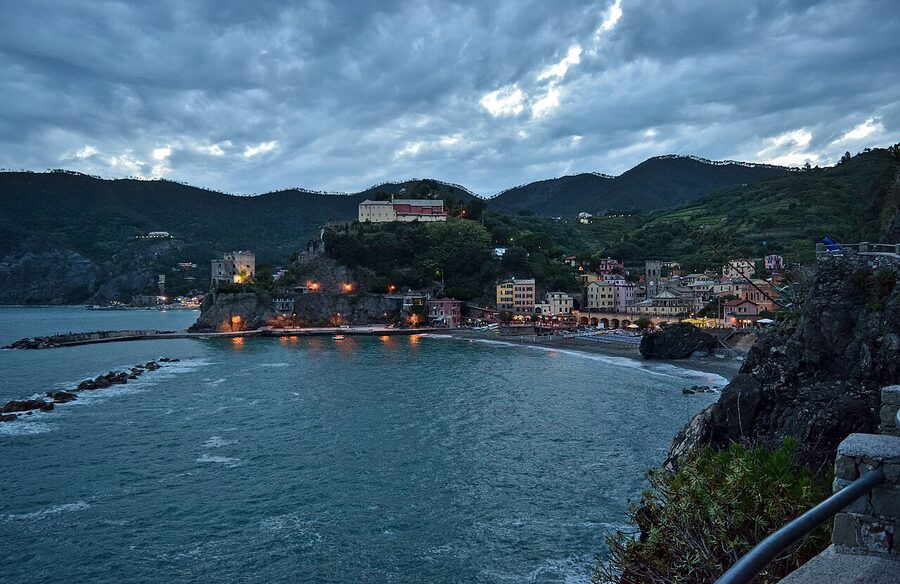

Monterosso — the westernmost and the largest of the five, and the odd one out. It’s actually two settlements joined by a tunnel: the older Monterosso Vecchio, clustered around the Gothic church of San Giovanni Battista and the medieval watchtower of Aurora, and the newer Fegina district west of the rail station, which has the beach-resort character (hotels, sand, rented umbrellas). The beach is the only real sandy beach in the Cinque Terre; everywhere else the coast is cliff or pebble.
What to do: swim at Fegina in the morning; walk the San Cristoforo headland between the two halves of town for the view; visit the Convento dei Cappuccini on the hill (a 17th-century monastery with a Van Dyck Crucifixion inside); eat anchovies. The Ligurian salted anchovy tradition (acciughe sotto sale di Monterosso) is a Slow Food presidium specifically from here — two producers still process the summer catch in wooden barrels. Try them fried fresh (May-October) at Ristorante Miky or preserved at Enoteca Internazionale on Via Roma.
Monterosso is the most hotel-rich of the five, which makes it the practical overnight choice if you want to be inside the park rather than in La Spezia.
Vernazza
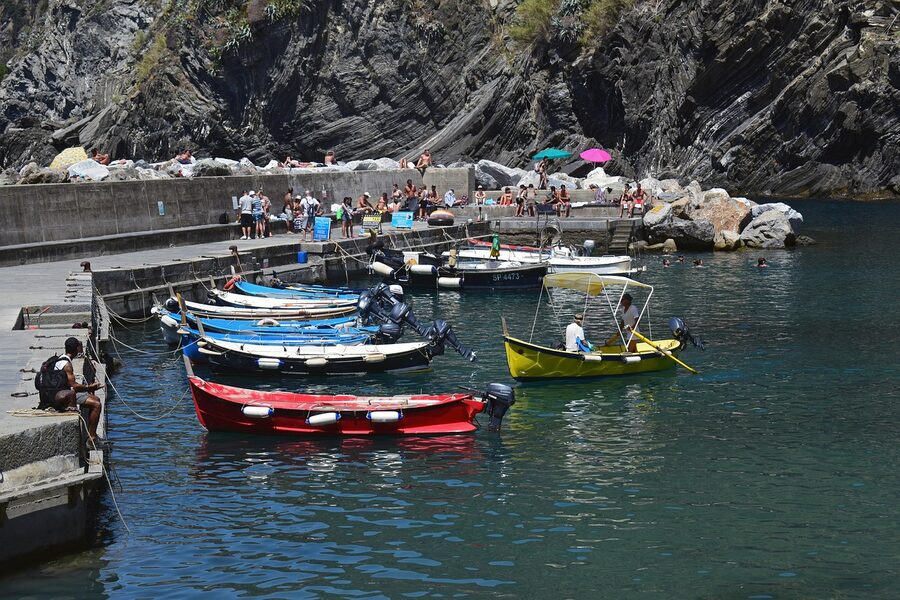
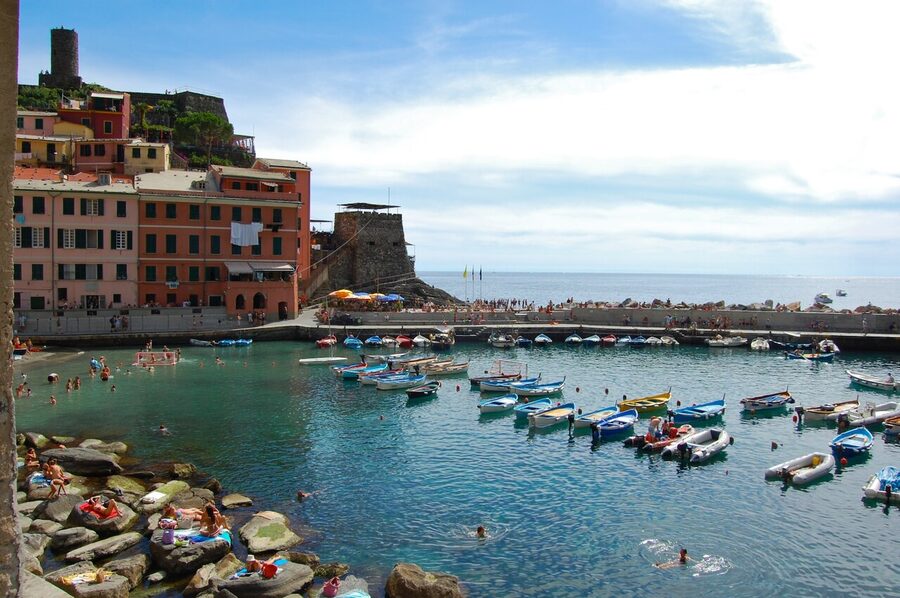
Vernazza is, most people think, the prettiest of the five. The village is built around a single tight natural harbour, the only real one in the Cinque Terre, with a breakwater built by the Genoese Republic in 1443. A 12th-century watchtower (the Castello Doria) still stands on the headland; the church of Santa Margherita d’Antiochia, right on the harbourside, was consecrated in 1318 and leaves one of its sides open directly to the sea. The main street, Via Roma, runs inland from the harbour for about 300 metres and dead-ends at a steep flight of steps that becomes the mountain path toward Corniglia.

Vernazza was hit hardest by the 2011 mudslide. The main street was buried to the level of the first-floor windows; the train station was destroyed; three people died. The rebuild took four years and was largely led by the village itself — the Save Vernazza charity raised US$1.5 million from former visitors around the world. You can still see the reconstruction in places: the tide marks on the walls of the church, the newer paving on Via Roma.
What to do: climb up to the Castello Doria (€1.50, opens at 10am, tiny tower with a staggering view) and order an aperitivo at Il Pirata delle 5 Terre on the harbourside.
Corniglia
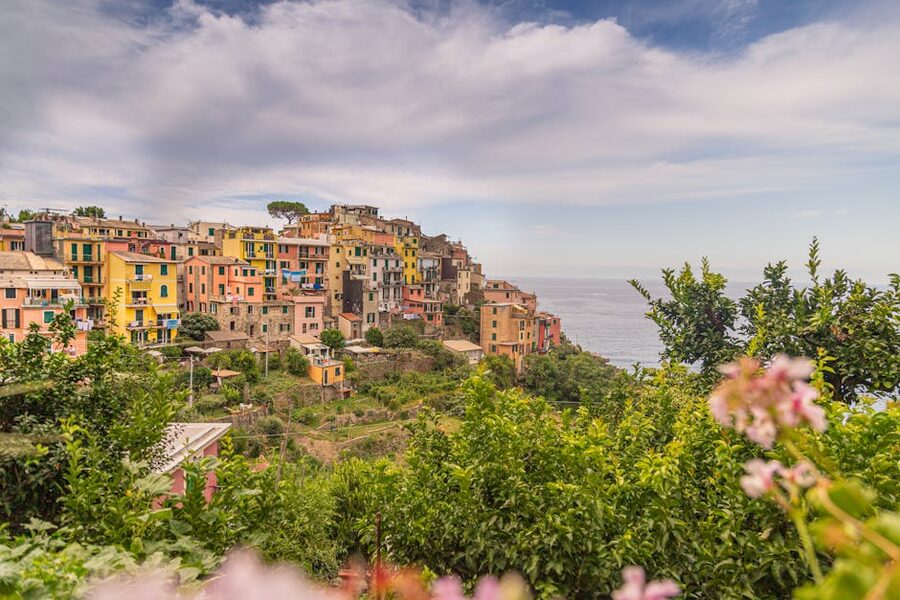
Corniglia is the middle village, the smallest of the five, and the only one that isn’t directly on the sea. The village sits on a clifftop 100 metres above the water, connected to its train station at sea level by a zigzag staircase of 382 steps called the Lardarina. There’s a shuttle bus if you don’t want to climb (€2.50, included in the Cinque Terre Card). Most day-trippers skip Corniglia for exactly this reason, which is why it is, in my view, the best of the five to stay in.
The village itself is a single spine-road called Via Fieschi running 400 metres along the ridge, with the small church of San Pietro at one end and a small terrace (Terrazza Santa Maria) at the other, with a view up the coast toward Vernazza. There is exactly one proper restaurant (Osteria A Cantina de Mananan, in a medieval stone cellar, excellent), two gelaterias (Alberto, with a honey-ginger flavour that is unusually good), and a handful of rooms to rent. Walk the length of the village in ten minutes; look at the view for thirty.
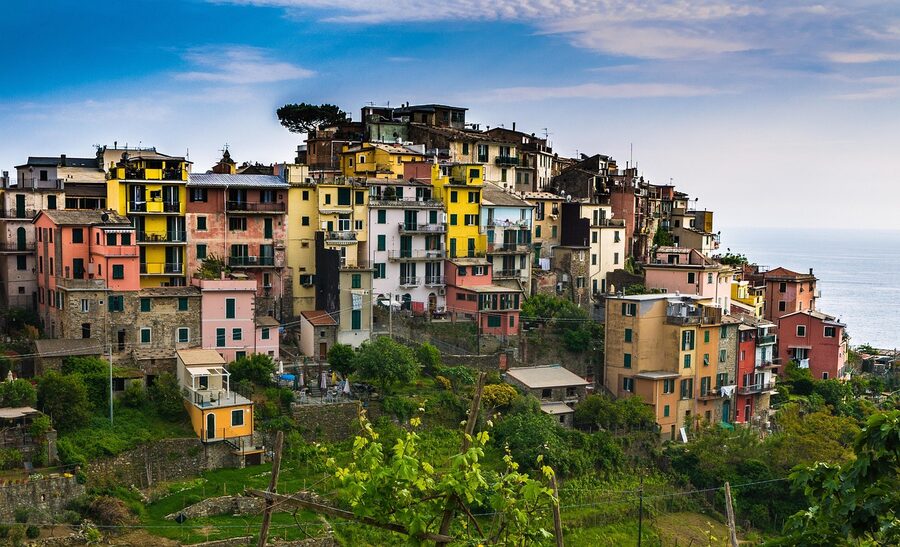
The beach below Corniglia — Spiaggia della Corniglia or Guvano — is a cove below the clifftop reachable by a long abandoned railway tunnel. It’s been on and off accessible for years (the tunnel has been officially closed since 2012 for safety reasons but rebels still get in). Check current access at the park office before attempting; I have not been since 2018.
Manarola
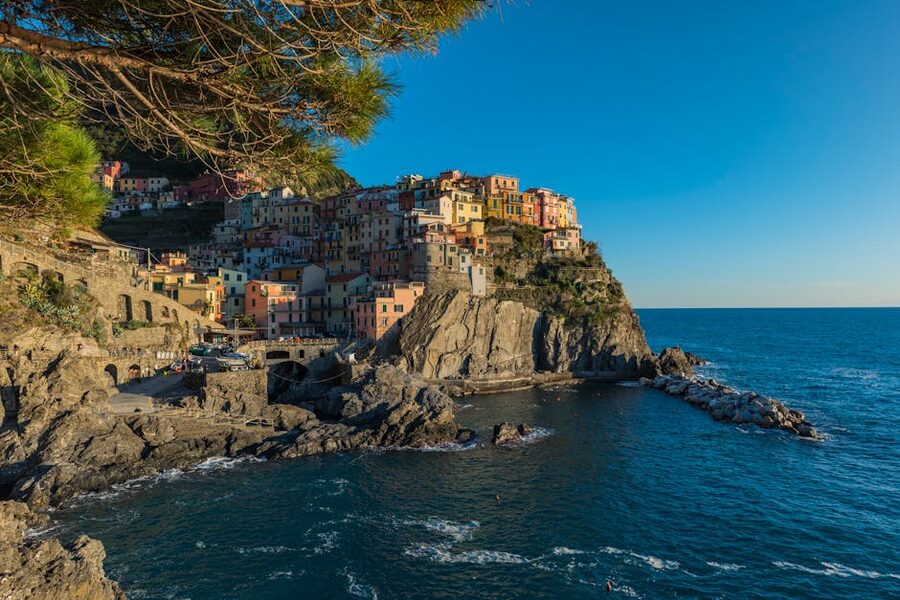
Manarola is the second-smallest (population 450) and the most postcard-perfect. A single steep slope of pastel houses crammed down to a tiny harbour with no actual port — the boats are pulled up onto a concrete ramp by tractor when the swell is heavy. The viewpoint on the cliff path east of the village (toward Riomaggiore) is where every photo you have seen of the Cinque Terre was taken.
What to do: walk up to the Chiesa di San Lorenzo (12th-century, Romanesque, worth a look), sit on the rocks of Punta Bonfiglio with a glass of Sciacchetrà (the town’s main dessert-wine producer, Cinque Terre Winery, is here and will pour you a tasting for €15), and walk the Via dell’Amore if it’s open (the cliff-cut coast path to Riomaggiore, closed intermittently since the 2012 rockfall; as of 2024 a reopened short section exists with a €5 ticket and a cap of 400 people an hour; check the park site for status).
Riomaggiore
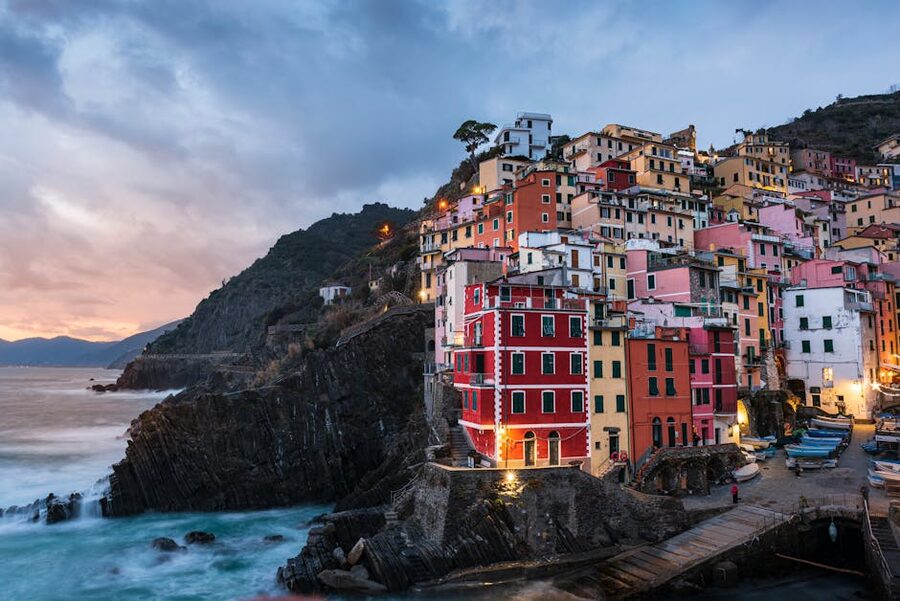
Riomaggiore is the easternmost village and the biggest after Monterosso. It’s built into a steep V-shaped ravine (the Rio Maggiore, from which the town takes its name, is now covered over under the main street) with pastel houses stacked up both sides, a small harbour at the bottom with bright fishing boats pulled onto the concrete ramp, and a 13th-century castle (Castello di Cerricò) on the headland.
What to do: climb up to the castle (the Torre di Guardia, €1.50, short opening hours), walk the Via Colombo (the main drag, with most of the restaurants), and sit on the breakwater at sundown. The best restaurant is Trattoria La Grotta on Via San Giacomo — anchovies, stuffed mussels, tegame alla vernazzana, and a brief wine list that is all local. Book ahead in summer.
Riomaggiore has the most apartment rentals of the five and is a practical base if Corniglia or Vernazza are full. The downside is the train station is directly under the village and trains run until around 1am — book a flat at the top of the village rather than the bottom.
The hiking trails
The Sentiero Azzurro (Blue Trail) is the low-level coastal trail that used to link all five villages on a 12-km path from Monterosso to Riomaggiore. It’s been intermittently closed since the 2011 floods, and currently operates in four segments of varying difficulty and availability:
- Monterosso → Vernazza (3.5 km, 2h, open, €7.50 with the Cinque Terre Card)
- Vernazza → Corniglia (4 km, 1.5h, open, same card)
- Corniglia → Manarola (2.5 km, 1h, closed indefinitely since 2012; alternative via the high trail)
- Manarola → Riomaggiore (the Via dell’Amore, 1 km, 20min, partially reopened as of 2024 — check status; €5 supplement)
Beyond the Blue Trail, there’s a network of high trails that run higher up the mountainside above the villages — part of the national park’s 120km of walking routes. These are mostly still accessible and free. The Sentiero Rosso (Red Trail) is the high east-west spine that takes 9-12 hours end-to-end; most people do a single day-section, typically Corniglia to Volastra (which lets you skip the closed lower section to Manarola).
Hiking advice: wear real shoes (not sandals), carry water (1.5 litres in summer), start early (8am at the latest in July-August), and do not walk the trails in heavy rain — the park has had multiple fatal falls from tourists attempting wet rock in the wrong footwear. Summer afternoons of 30°C and full sun are also a problem; walk before 11am or after 5pm.
The terraced vineyards and Sciacchetrà
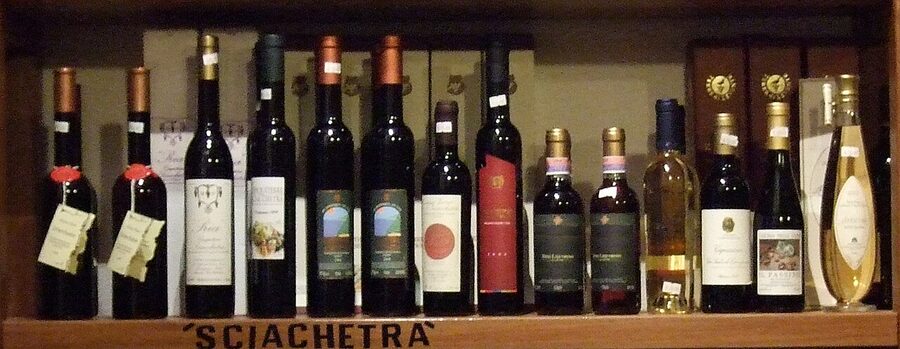

The terraces of the Cinque Terre support about 100 hectares of active vineyards today — down from an estimated 1,400 hectares in 1900. The wines produced are Cinque Terre DOC (a dry white blend of Bosco, Albarola and Vermentino) and, more famously, Sciacchetrà DOC (the same grapes but air-dried for 40-60 days before pressing, producing an amber-coloured passito dessert wine). Sciacchetrà has been made in the Cinque Terre since at least the 14th century — Boccaccio mentions it in the Decameron.
Four producers worth visiting: Cantine Cheo (Manarola, small and careful), Possa (Riomaggiore, family operation), Buranco (Monterosso, with the added benefit of a small agriturismo), and Cooperativa Agricoltura 5 Terre (the cooperative, Groppo — not the best but a useful blend of growers). A bottle of Sciacchetrà costs €25-50; the cheaper tourist-shop stuff is often not the real thing. Look for the DOC fascetta (band) with the park logo.
Food
Cinque Terre food is seafood and Ligurian staples, pared down to the essentials the villages can produce locally. Five things to try:
Acciughe — anchovies, three ways: fresh, fried whole; marinated, in oil with lemon; or salted, the acciughe sotto sale di Monterosso Slow Food presidium. Everywhere does them. The marinated ones at Ristorante Belforte in Vernazza (€14) are as good as they get.
Tegame alla vernazzana — a baked dish of anchovies, potatoes, tomatoes and olive oil in a terracotta pot, specifically a Vernazza recipe. Simple, peasant, excellent.
Trofie al pesto — the classic Ligurian pasta dish, made here with trofie (the short twisted Ligurian pasta) rather than trenette. Every trattoria has it.
Frittura mista — a mixed fry of small local fish, squid rings, prawns, eaten with lemon and a glass of Cinque Terre DOC white. €12-16 a plate.
Gelato al limone — the local lemons (grown on terraces higher up than the vines) make the best lemon gelato in Italy. Try it at Gelateria 5 Terre in Manarola.
Strategy: when to come, and for how long
The Cinque Terre rewards strategy. The single best piece of advice is: stay overnight inside the park. Day-trippers arrive between 10am and 11am and leave by 5pm. Outside those hours the villages are quiet and usable; inside them, they are crowded enough that you will not enjoy yourself in peak season. Stay two nights minimum if you can.
When to come: May, June, September, early October are the sensible windows. Sea is warm enough to swim by late May; trails are at their best in June and September; the first Sciacchetrà of the new vintage is released in September. July and August are packed (avoid unless you must). November through March is the off-season — most restaurants in Corniglia and Vernazza close, the Sentiero Azzurro is often closed for weather, but the villages are themselves and the hotels are cheap.
Where to stay: Corniglia for the quietest experience, Vernazza for the prettiest setting, Monterosso for hotels and the beach, Riomaggiore for apartment rentals. Not Manarola, generally — too small and too photographed, the village genuinely empties at night. For proper hotels, Hotel Porto Roca in Monterosso (from €180) and La Malà in Vernazza (from €200) are the best in the park; below them, Airbnb or camera privata is usually the answer.
How long: two nights is the minimum for the experience. Three is more comfortable. Longer than four and you will start to notice the resort feel. If you have a week in the area, split between Cinque Terre and Portovenere/La Spezia (the Gulf of Poets, which is excellent and nobody comes).
Is it worth it?
If you are in Italy for the first time and you want to see the picture you saw on the calendar, yes. If you are a repeat visitor and you want quiet, pick Camogli or Noli or Portovenere instead. If you are prepared to be strategic — arrive late, stay overnight, eat dinner after the last train, walk the trails at 7am — the Cinque Terre can still give you the experience you came for. Just don’t fly in at 11am in August and walk Via dell’Amore with 2,000 other people and then complain to me that the magic is gone.
For broader context see the Liguria hub, the Genoa guide, and the guides to Sanremo and Savona as they go live.