
Maratea is the only town on Basilicata’s Tyrrhenian coast. The regional coastline there is thirty kilometres long — squeezed between Campania in the north and Calabria in the south — and the town of Maratea occupies almost all of it. Five thousand permanent residents, forty-four churches (the claim, locals say, is one for every day of Lent), a 21-metre marble Christ on the headland above, and a coast of cliffs, coves, and a handful of beaches accessible only by path or by boat. It is the least-visited stretch of the Italian Tyrrhenian, and — in the opinion of almost everyone who finds it — one of the best.
I came here first as a detour from the Amalfi Coast, expecting a minor consolation. What I found was a town that has resisted most of the mass-tourism development that has disfigured the rest of the southern Tyrrhenian since the 1970s. The road in from Sapri or from Praia a Mare is unforgiving — hairpin after hairpin — and the railway station is nowhere near any of the useful bits of town. Both of those things have kept the crowds out. The Italians know about Maratea; most foreign visitors don’t. The town is called — with justified exaggeration — the Perla del Tirreno, the Pearl of the Tyrrhenian.
In This Article
What Maratea actually is
A single comune of 5,000 people that stretches across 30 kilometres of cliff coast, divided unofficially into four neighbourhoods:
- Maratea Paese (also called Maratea Borgo) — the medieval hilltop centre, at 300 m above sea level, population about 2,000. Stone alleys, small piazzas, small churches.
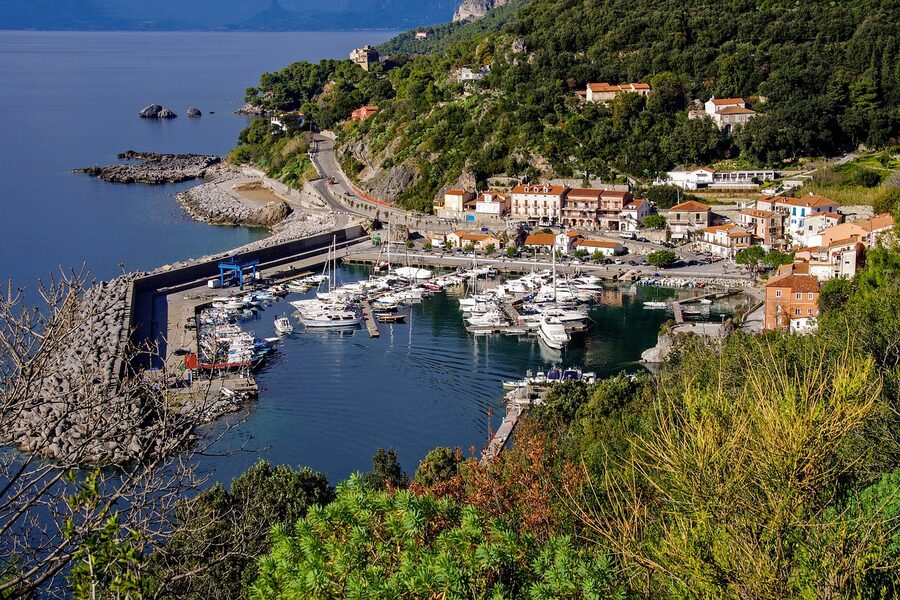
- Maratea Porto — the small fishing harbour directly below Maratea Paese, reached by a 5-km winding road. About a dozen restaurants along the quay, fishing boats, a cable-operated boat ramp.
- Fiumicello and Cersuta — the main beach district, 3 km north of the port.
- Acquafredda and Castrocucco — outlying hamlets at the north and south ends of the comune’s long coast.
The town sits inside a dramatic amphitheatre of cliffs: Monte San Biagio (644 m) rises directly behind Maratea Paese and supports the Cristo Redentore statue on its summit. Further inland, the mountains of the Parco Nazionale del Pollino form a wall between Maratea and the Basilicatan interior — a two-hour drive from Maratea Paese to Potenza or Matera through serious mountain roads.
Historically: the town’s founding is lost; the first documented reference is a 7th-century AD Byzantine source. The modern town began as a medieval walled settlement on the hilltop (walls mostly gone now), prospered under the Normans and Hohenstaufens, was a target of Saracen raids from the sea (which is why the original settlement is on the hilltop, not the coast), stayed poor and isolated under the Bourbon Kingdom of Naples, and essentially didn’t change between the 17th and 20th centuries. The 1965 Cristo Redentore and the post-war road-building programme dragged the town into the modern tourism economy.
Getting there
Maratea is awkwardly-connected by design. The railway station is 3 km below the Paese, on the Napoli-Reggio Calabria mainline (3h from Napoli, 2h from Reggio). Regional trains stop; a handful of Frecciargento services do too. From the station, local buses run up to the Paese and the Porto, approximately hourly in season, less often in winter.
By car, the practical routes are:
- From the north: A3 Napoli-Salerno motorway, exit at Lagonegro Nord or Sicignano-Lagonegro, then SS585 Fondo Valle del Noce to Sapri and Maratea. About 2h30 from Napoli.
- From the south: A3 (now A2) exit at Campotenese, then SS585 via Trecchina. About 45 min from the motorway.
- The scenic alternative: the SS18 Tirrena Inferiore coastal road, a minor road that hugs the coast from Sapri to Praia a Mare. Spectacular, slow, and the right choice if you have time.
By ferry: there is no ferry service to Maratea. The nearest ports are Sapri (30 min north) and Praia a Mare (30 min south), both small.
Parking inside Maratea Paese: there are three pay car parks (Parcheggio Capo Casale, Parcheggio Piano di Gioia, Parcheggio Vigneto), each €2/hour. The old town is pedestrianised.
The Cristo Redentore
The single most-photographed feature of the town — and the standard first-visit destination — is the Cristo Redentore di Maratea, a 21-metre-tall statue of Christ the Redeemer on top of Monte San Biagio. Erected in 1965 on the commission of the local Count Stefano Rivetti, a wealthy cloth manufacturer from Biella who had retired to Maratea and wanted to leave a monument. Sculpted in Carrara marble and reinforced concrete by the Florentine sculptor Bruno Innocenti, it stands second only to Rio’s Cristo Redentor in height among such statues worldwide.
.JPG)
The statue faces inland, toward the Basilica di San Biagio — a 17th-century chapel at the summit dedicated to Saint Blaise, Maratea’s patron saint. The statue’s orientation (away from the coast) surprises many first-time visitors; the explanation is that it’s designed to bless the basilica and the town itself, not the sea.
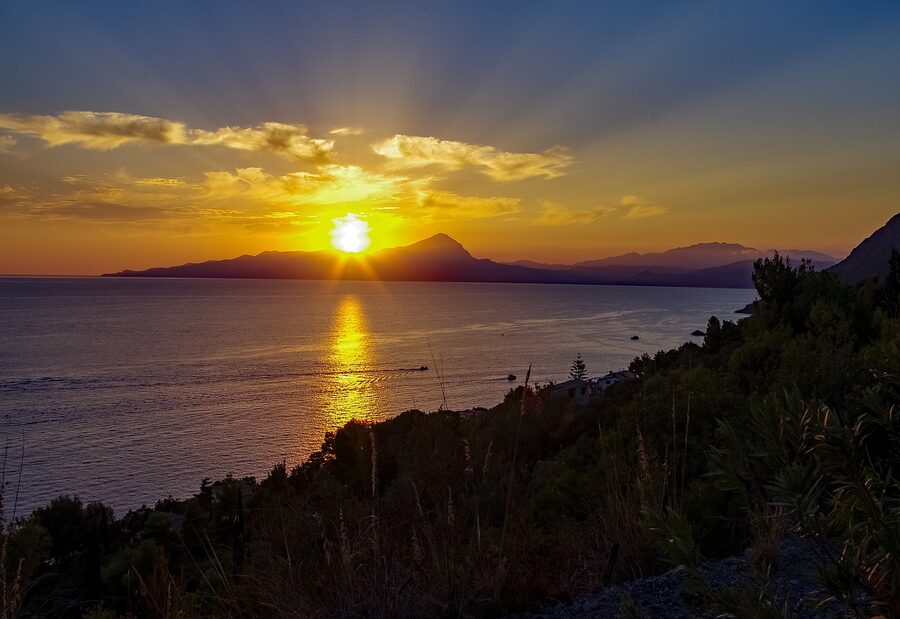
Getting to the top: drive up from Maratea Paese on a narrow, well-marked road (parking €3 at the upper lot); then walk the last 400 metres up a paved path. Alternatively, from May to October, an electric shuttle runs from a lower parking area every 30 minutes (€2). Always free to approach the statue. Come at sunset on a clear day; the view is legendary.
A minor local controversy: the basilica’s roof was controversially rebuilt in 2015-17 in a distinctly modern style, which some residents hate and others consider the best thing about the site. Judge for yourself.
Maratea Paese — the hilltop town
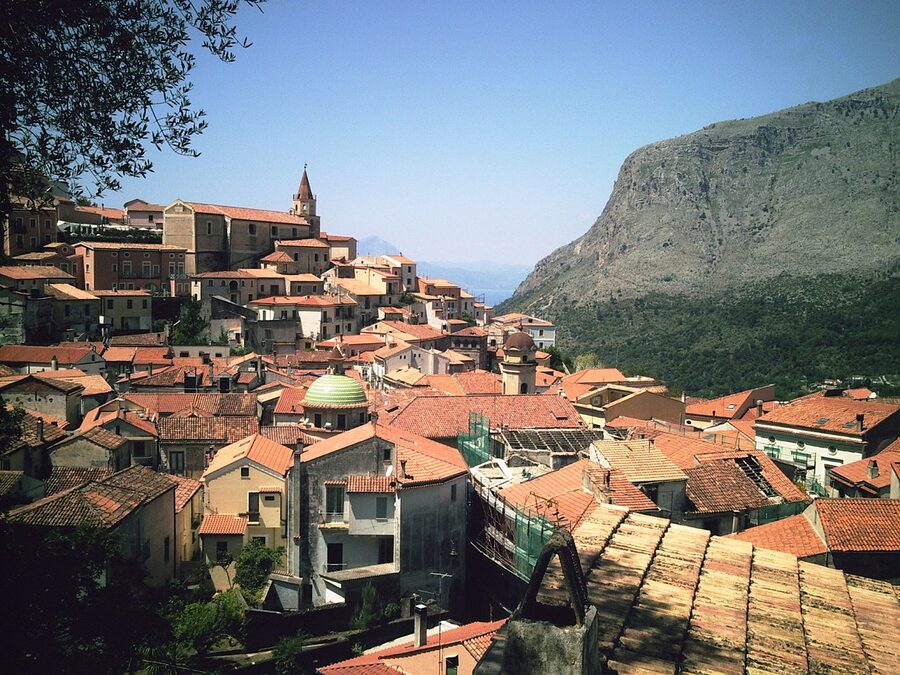

The hilltop centre is the emotional heart of the town. A tight medieval street plan (roughly T-shaped, with one main spine and two perpendicular axes), stone houses of four or five storeys, tiny piazzas with lemon trees and the occasional fig, about a dozen of the claimed 44 churches actually still standing and in use. Population up here is about 2,000. Most of the restaurants and shops are on Via Santa Caterina and Via Dei Mille, the two main axes.
Worth an afternoon:
- Santa Maria Maggiore — the main town church, 16th-century Baroque over a medieval foundation, with a 17th-century silver reliquary of Saint Blaise.
- Addolorata — a small 18th-century church with a notable Baroque altar.
- Torre dei Molini — a medieval tower, the last surviving piece of the town walls.
- Palazzo De Lieto — an 18th-century noble palace now housing the tourist information office; the façade has an extraordinary sequence of carved stone balconies.
- The small passeggiata loop — the roughly 30-minute circular walk around the outside of the hilltop, entirely paved, with unbroken views across the coast.
Plus the restaurants and bars — the cluster around Piazza Buraglia is where the evening life happens, particularly in summer.
Maratea Porto
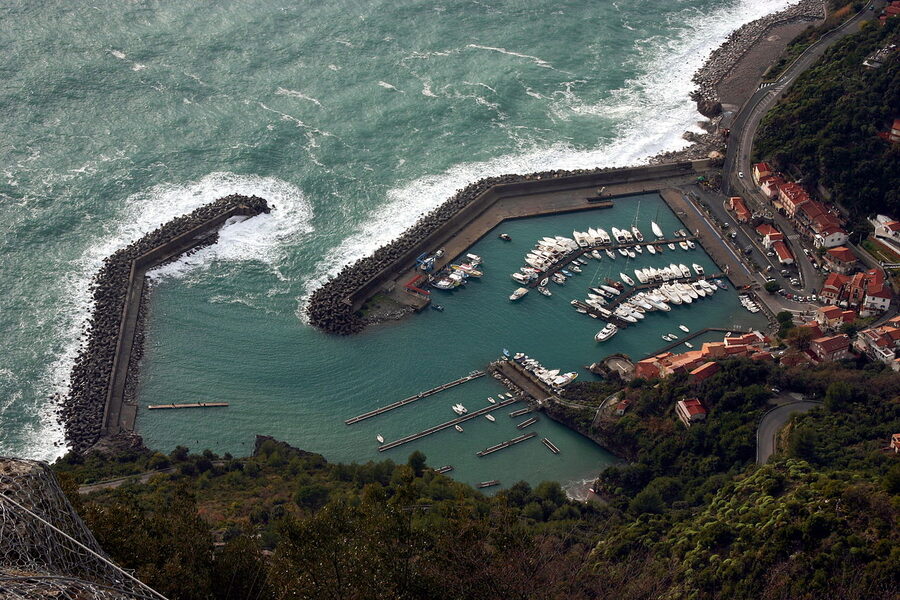
The Porto is a small semi-circular harbour directly below the hilltop, reached from the Paese by a 5 km descending road (by car, 10 min; on foot, a restored ancient track of about 45 min each way). It sits under a sheer cliff of 150 metres, which shelters it from the prevailing northerly winds. About twenty small fishing boats are berthed here; in summer, a further thirty-odd yachts moor in the season’s tourist traffic.
Three reasons to come down:
- The Grotta delle Meraviglie — a small show cave directly on the seafront, 120 metres of natural passages with stalactites and stalagmites. Discovered in 1929. €5 entry. Fifteen-minute guided visit. Worth it if you’re already at the port.
- The restaurants — six or seven seafood trattorie directly on the quay, each with a terrace over the water. Ristorante La Masseria and Zà Mariuccia are the traditional pick.
- The boat excursions — half-day and full-day trips along the coast to visit the grottoes and beaches that are inaccessible from land. Operators work the quay in summer; expect €30 for a 3-hour trip with a group, or €150-200 for a small private boat.
The coast and the beaches
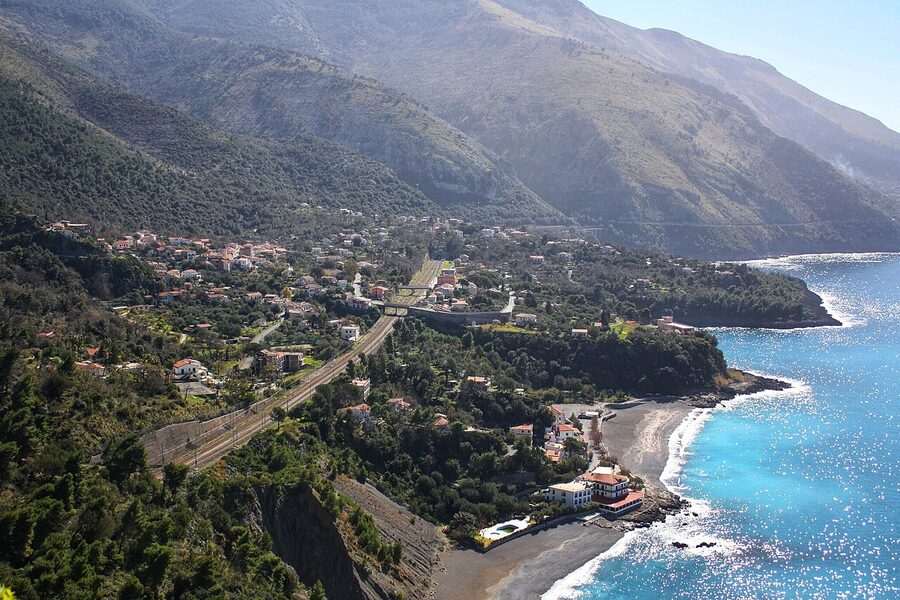

Maratea’s coast is fundamentally cliff-dominated — 30 kilometres of limestone cliffs interrupted by small pocket beaches. Fifteen named beaches, of which perhaps eight are practically accessible without a boat. The good ones:
Fiumicello — the largest beach of Maratea, a curving sand-and-pebble strip at the mouth of the Fiumicello stream. Free public beach plus paid lidi at the edges. Shallow water, good for children. Main summer scene.
Spiaggia Nera di Cala Jannita — “Black Beach”, a 300-metre pebble beach with unusually dark sand (not volcanic — the local rock is a grey-black limestone, and erosion produces near-black grit). Reached by footpath from the road; 10-minute walk downhill. Free public access, no facilities.
Cala di Mezzanotte (“Midnight Cove”) — an intimate small cove between Fiumicello and the port. Access by rocky path or by boat. Clear deep water. Favourite of Italians who know Maratea well.
Spiaggia delle Secche — north of the port, a natural platform of flat rocks you can sunbathe on, plus a small sand strip. Access from the coastal road via a path.
Spiaggia di Macarro — at Castrocucco, at the southern end of the Maratea coast, a broader curving beach with more typical Italian beach-resort development.
For the best beaches — Spiaggia del Cavaliere, Spiaggia di Filocaio, Cala Castrocucco — you need a boat. The boat excursions from the port (see above) stop at several of these.
Food and drink
Maratea eats fish. That’s the headline difference from the rest of inland Basilicata. The pasta and bread traditions are shared with the region (fusilli al ferretto, peperoni cruschi, pane di Matera), but the main courses are all seafood. Five things to eat and two to drink:
Acciughe marinate — fresh anchovies, filleted, cured in lemon juice and white wine vinegar, dressed with olive oil, parsley, a crushed garlic clove, and occasionally chilli. Served cold, with bread. Ubiquitous as an antipasto at the port restaurants.
Pesce al sale — local sea bream or sea bass encrusted in rock salt and baked whole until the salt forms a hard shell; cracked at the table, served with lemon and olive oil. The classic Porto dinner.
Spaghetti ai ricci — spaghetti with sea urchins. Only in season (autumn to early spring); ask first when you sit down. A labour-intensive dish (one urchin per person at minimum) and one of the top pastas in the southern Tyrrhenian.
Alici di Maratea — the local Maratea-branded anchovies, salt-cured, sold in small terracotta pots at delis. Similar in spirit to Monterosso or Sicilian anchovies but with a local producer and a slightly different flavour. €12-18 per 250g pot. A good gift to take home.
Fico d’India e mozzarella — prickly pear with mozzarella as a summer antipasto. The cactus grows everywhere around Maratea, and the local trick of pairing the sweet fruit with fresh buffalo mozzarella is quietly addictive. Only September-October.
Aglianico del Vulture — the great Basilicatan red, see the Basilicata hub for detail. Most Maratea restaurants stock a selection; the top producers (Paternoster, D’Angelo, Elena Fucci) are a 90-minute drive inland. A glass goes surprisingly well with sea urchin pasta.
Greco di Tufo (actually from over the border in Campania but universal in Tyrrhenian seafood restaurants) — a light, mineral white that pairs better with fish than the regional reds. €15-20 a bottle.
For a proper meal: Ristorante La Locanda delle Donne Monache (inside the boutique hotel of the same name, in Maratea Paese) is the serious fine-dining option; Taverna Rovita (Via Rovita 13, also in the Paese) does traditional dishes in a 17th-century wine cellar; Ristorante Za Mariuccia on the Porto quay is the seafood classic. Budget-friendly: Il Sacello in Fiumicello, a beach trattoria that does a €20 three-course lunch in summer.
Where to stay
For an overnight (strongly recommended), choose which Maratea you want:
In Maratea Paese — the hilltop atmosphere, good restaurants, zero sea access. La Locanda delle Donne Monache (from €280), Hotel Il Faro (from €150), Locanda San Biagio (from €140). Walking distance to everything in the old town.
On the coast at Fiumicello — direct beach access, hotel-resort style, noisier in summer. Santavenere (an elegant 1950s hotel, from €350), Villa Cheta Elite (an Art Nouveau villa at Acquafredda, from €250).
At the Porto — sea views from the room, harbour sounds, walk to restaurants. Residence Villa del Mare (apartment-style, from €150).
For an agriturismo experience, try Masseria Sant’Elisabetta in the hills above the town (from €160, with pool and dinner on request).
Two nights is the minimum. Three is the comfortable length — one night for the Cristo and the Paese, one for the Porto and a boat trip, one flexible for a beach day or a coastal drive to Sapri and Scario in Campania.
When to visit
May-June and September-October are my recommended windows — 20-27°C, sea warm enough by late May, restaurants fully operating, almost no crowds. July-August is high season, the town is busy but nowhere near the levels of the Amalfi Coast 120 km north. Winter is quiet; the Porto largely closes down (a handful of restaurants stay open), but the Paese’s residential life continues through the cold months and the passeggiata on a crisp February Sunday is one of the great underrated winter walks in southern Italy.
Events to plan around: the Festa di San Biagio on the second Sunday of May — an elaborate procession with the saint’s silver reliquary being carried from the church in the Paese up to the Basilica of San Biagio on Monte San Biagio and back. The whole town processes together; it’s one of the most moving local religious festivals I’ve witnessed anywhere in Italy. Also: the Marateale film festival in late July.
Is it worth coming for?
If you’re between Naples and Calabria and have a half-day, Maratea is a strongly-recommended detour. If you’re planning a dedicated beach trip to the Tyrrhenian south, it’s the best alternative to the over-developed Amalfi and the increasingly busy Calabrian Tyrrhenian. For a full standalone trip — say five to seven days based here — it works beautifully, particularly combined with a driving loop to the Pollino National Park and to Matera.
The town has, in my experience, an unusual ability to persuade first-time visitors to come back. The combination of scale (small), landscape (dramatic), food (excellent), and the relative absence of foreign tourists produces something you don’t find often on the Italian Tyrrhenian anymore. For regional context see the Basilicata hub.