


Cinque Terre
The Cinque Terre is fifteen kilometres of cliff between two small seaside towns — Levanto in the west and Portovenere in the east — broken by five fishing villages that the sea has been trying to swallow for 800 years.…
Liguria is a three-hundred-kilometre strip of coast between the French border and Tuscany, pinched between the Mediterranean and the Apennines. At its widest, it’s 35 kilometres from the sea to the ridge. At its narrowest, it’s seven. It contains Italy’s busiest commercial port, its five most photographed fishing villages, the town where Columbus was born, the wealthiest private harbour in the country, and the only traditional pesto that exists. All of this happens inside a region about the size of Lancashire.
The shape of the place does most of the work. The mountains come down to the water almost everywhere, so the towns are either balanced on tiny shelves of flat land at sea level or stacked up the hillsides behind. The coastal railway — built in the 1860s through more than 200 tunnels — connects them all. You can, in theory, get off the train at any one of fifty stops between Ventimiglia and La Spezia and find a town worth stopping in. I recommend about fifteen of them. The rest of this hub is a filter.
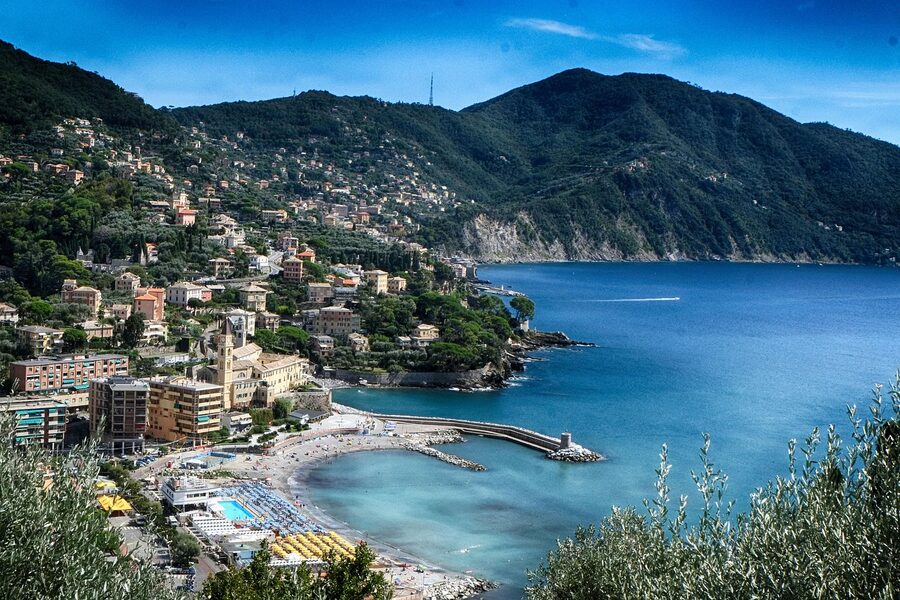
Geographically it’s a crescent. The coastline runs east-west, bending gently around the Gulf of Genoa, with the provincial capital of Genova roughly in the middle. The region divides, both culturally and in local parlance, into two rivieras:
Riviera di Ponente — the western half, from Genoa to the French border at Ventimiglia. The light is soft. The climate is warmer than any other part of mainland Italy (lemons, palms, olives grow to the water’s edge). The towns are older on the Roman network, generally quieter, and the beaches are the flat sandy Mediterranean variety. Key stops: Savona, Noli, Albenga, Alassio, Imperia, Bordighera, Sanremo.
Riviera di Levante — the eastern half, from Genoa to the Tuscan border at La Spezia. The coast is steeper, wilder, and more dramatic: rock cliffs, pebble coves, terraced vines. This is where most of the famous place names are — Portofino, Santa Margherita, Camogli, Sestri Levante, the Cinque Terre. Crowds follow accordingly in summer.
Population is about 1.5 million, of whom around 580,000 live in Genoa itself. The region is older than most of Italy — it’s losing population slowly each year, the mountain villages are quietly emptying, and the coastal towns absorb increasing numbers of foreigners (British, Dutch, German) who have bought second homes in the better climate.
Historical short version: Ligurian tribes (pre-Roman, Celtic-influenced), then Roman Provincia Maritima Italorum, then Byzantine, then a succession of maritime city-states of which Genoa was the biggest. The Repubblica di Genova was one of the five Italian maritime republics (Venice, Genoa, Pisa, Amalfi, Ancona) and ran from the year 1005 to 1797 — nearly 800 years of continuous self-rule, longer than Venice’s. Napoleon dissolved it. It joined unified Italy in 1815 via the Congress of Vienna. The other four republics — Pisa, Amalfi, Ancona — never really recovered their independence; Genoa at least kept its character.
Liguria is served by two airports. Genoa Cristoforo Colombo (GOA) sits on a polder right next to the old port and has the best views on approach of any airport in Italy. It runs limited year-round European traffic (Ryanair, easyJet, ITA) and seasonal charters. Nice Côte d’Azur (NCE) is 35 km from the western border at Ventimiglia and has much better international connectivity; it’s worth flying there and catching the train along the coast.
The Milano-Ventimiglia and Torino-Savona-Genova railway lines cover the region thoroughly. High-speed Frecciarossa and Frecciabianca from Milan to Genoa take 90 minutes. Regional trains stop at every town. The coastal line from Genoa to La Spezia — the one that serves the Cinque Terre — is one of the great rail journeys of Europe.
If you’re driving, the A10/A12 motorway runs the full length of the coast from Ventimiglia to La Spezia, hugging the hillsides with a relentless sequence of tunnels and viaducts (the 2018 Morandi Bridge collapse in Genoa was on this road — a replacement has been in service since 2020). The scenic alternative is the old coastal Aurelia highway, which threads through every town and is much slower but considerably more interesting.
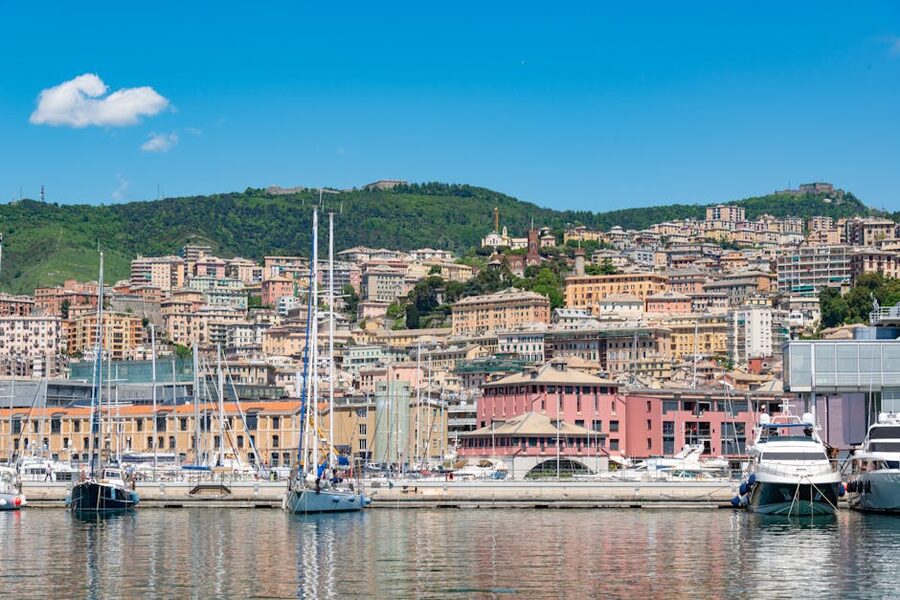
Genoa is the regional capital and Italy’s biggest commercial port. It has been at it since the Romans. The old town — the caruggi — is the largest continuously-inhabited medieval centre in Europe, officially UNESCO-listed since 2006 for its ensemble of 42 Renaissance and Baroque palaces along Via Garibaldi (the Strade Nuove). It’s also where Christopher Columbus was born (or at least was baptised at Santo Stefano; the exact house is disputed), where Niccolò Paganini played his first violin concert, where Giuseppe Mazzini started the Italian Risorgimento, and where the Baroque painter Bernardo Strozzi painted before he was forced to flee to Venice.
The city has a reputation for being gritty, commercial, and harder to love than Florence or Venice. That reputation is earned — the port is still a working port, the bomb damage from 1943-45 is still visible in patches, and the caruggi after dark are not a stroll. But it’s also, at this point, the single most underrated city in Italy. The old port was redeveloped in 1992 by Renzo Piano (a native son) for the Columbus quincentennial and is now one of the best city waterfronts in the Mediterranean. The Palazzi dei Rolli of Via Garibaldi contain Van Dyck and Rubens paintings that nobody queues for. The aquarium is the largest in Europe. The food is excellent.
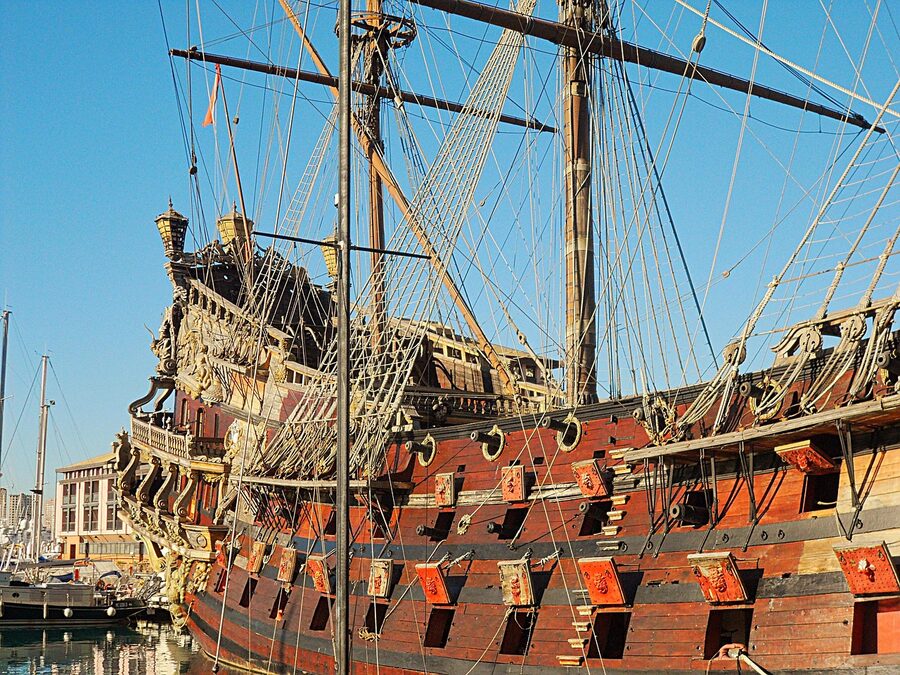
A full city guide is coming. For now, two days in Genoa will give you the old town, the Palazzi dei Rolli, the aquarium, the Galata Maritime Museum, dinner on Piazza delle Erbe, and a morning at the old port.
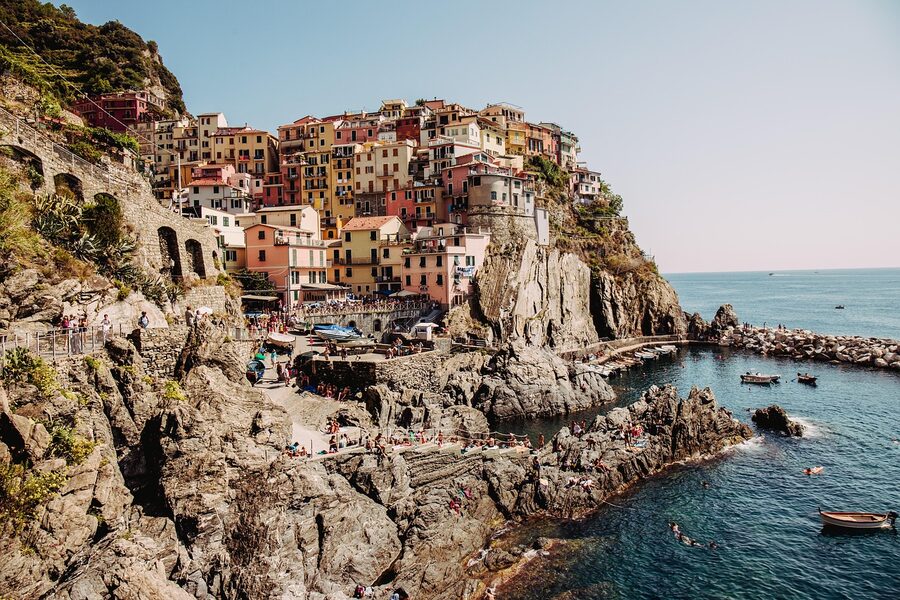
The Cinque Terre — five villages perched on a fifteen-kilometre stretch of cliff on the Riviera di Levante, between Genoa and La Spezia — is the most famous piece of Italian coast, and the most photographed, and consequently the most crowded. The five are, from west to east: Monterosso al Mare (the biggest, with the only real beach), Vernazza (arguably the prettiest, around a perfect pocket harbour), Corniglia (the only one on a clifftop rather than the sea, 382 steps up from its station), Manarola (the one on the postcards), and Riomaggiore (the easternmost, a long staircase of pastel houses running down to a tiny port).
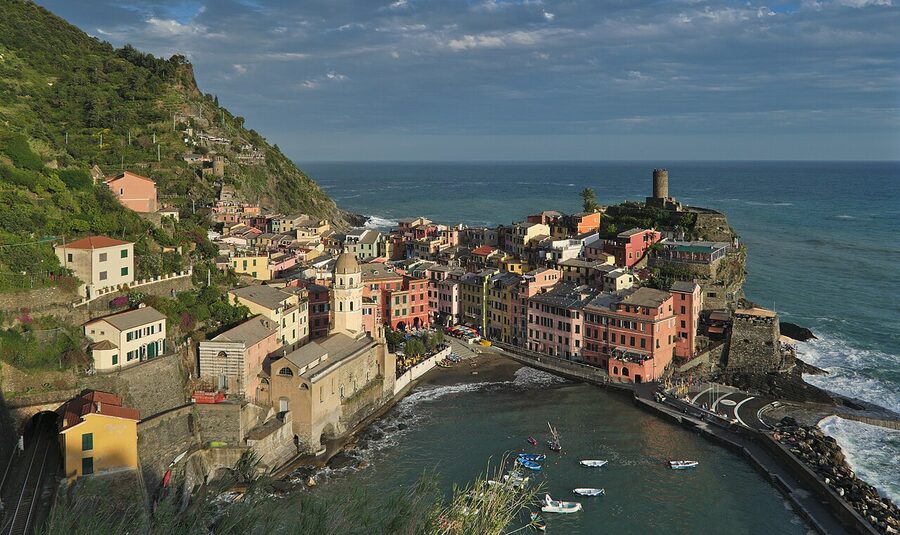
The villages are linked by a regional railway with frequent stops. They are also linked on foot, in season, by the Sentiero Azzurro (Blue Trail) and a network of higher, more difficult mountain paths. Stretches of the Sentiero Azzurro have been closed on and off since the 2011 mudslides; check the Cinque Terre National Park website for current access before you start planning hikes. The Cinque Terre Card (€7.50 one day, €14.50 two days) combines unlimited train travel between the villages with access to the paid paths and a couple of museums. It’s worth it.
Strategic advice for visiting the Cinque Terre: stay overnight. Day-trippers flood in from La Spezia and Levanto between 10am and 5pm, and for those hours the five villages are unpleasantly packed. Overnight, you get the villages back. Dinner in Vernazza with the boats at your feet is worth the effort of finding a room. The cheapest, best-located option is usually a camera privata via Airbnb or a local rental; proper hotels are few and expensive.
Don’t skip the Sciacchetrà — the local Cinque Terre dessert wine, made from dried Bosco and Albarola grapes grown on the terraces above the villages. Sweet, amber, intensely aromatic, served in small glasses with a slab of cheese or a cantucci biscuit. A bottle costs €25-50 from the producers’ own cellars (Cantine Cheo, Buranco, Possa). Cheaper versions sold in tourist shops are not the real thing; check the DOC label.
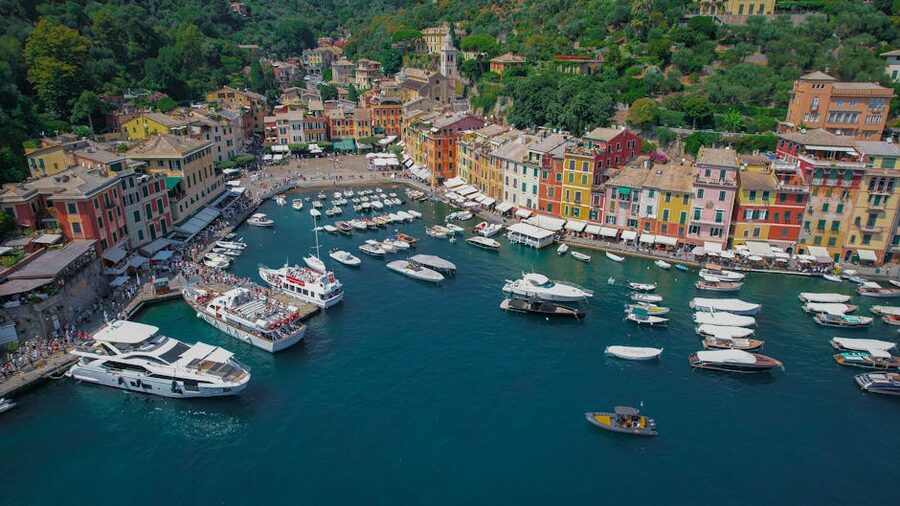
Portofino is small — permanent population about 400 — and has been Europe’s quiet-luxury harbour since the 1950s. The village is a single compact square (Piazzetta di Portofino) and one curving row of coloured waterfront houses wrapping the inside of the port, with a castle on the headland and one of the most expensive restaurants in Italy (Belmond Hotel Splendido Mare’s DaV Mare) on the quay. The approach by road is impractical in summer — the final six kilometres from Santa Margherita have one lane and no parking — so most people arrive by ferry (regular departures from Santa Margherita Ligure, €6 each way), by foot (a 5km coast walk from Santa Margherita, beautiful), or by private boat.
The public part of the town takes about an hour. The private estates (Villa Olivetta, Villa Altachiara, the old castle) are closed unless you have an invitation. What is open to everyone — and the real reason to come — is the headland path to the Castello Brown (15th-century fortress, €5, views), the further walk to the Abbey of San Fruttuoso (1.5 hours each way, steep, excellent) and the beach at Paraggi, one of the few sand coves in Liguria proper.
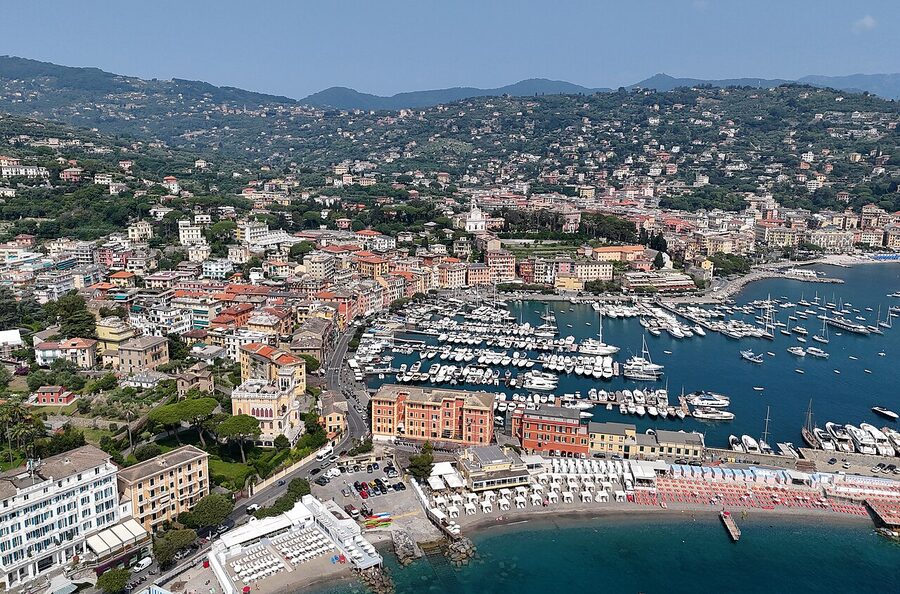
Santa Margherita Ligure is the practical base for Portofino, four kilometres down the road, and in many ways the better town. Bigger (population 9,000), a proper train station, good mid-range hotels, a working fishing fleet that brings in prawns and anchovies for the restaurants, and one long palm-lined seafront that goes from formal to casual as you walk west. Base yourself here, and day-trip to Portofino on the ferry.
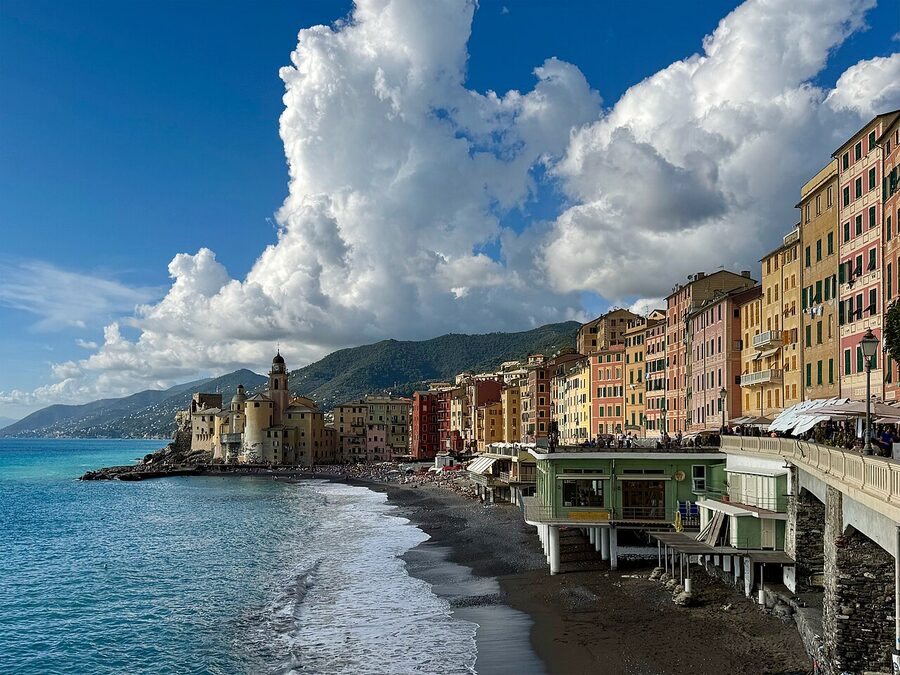
Camogli is my own favourite of the Levante towns. 5,000 people, on the Golfo Paradiso ten minutes from Genoa by train. The buildings are startlingly tall (six-seven-eight floors) and painted with trompe-l’œil pilasters and window surrounds — a maritime fishing town that in the late 19th century had a merchant fleet of over 2,700 ships, second only to Amsterdam. The town’s church (Basilica di Santa Maria Assunta) sits on the point where the harbour begins; the second Sunday of May, the town holds the Sagra del Pesce, cooking fish in a giant three-metre-wide pan on the beach and serving to anyone who turns up.
The right reason to come, however, is the boat from Camogli to the Abbey of San Fruttuoso — a 10th-century Romanesque monastery tucked into a cove accessible only by sea or by a steep 90-minute hike over the Portofino peninsula. There’s a tiny pebble beach in front of the abbey, a restaurant, and the Cristo degli Abissi (Christ of the Abyss) — a bronze Christ statue 15 metres underwater in the bay, visible from the surface when the light is right, and a destination for scuba divers. The return boat leaves around 5pm.
The western half of Liguria is softer, warmer, older, and less touristed than the east. Four stops worth making:
Sanremo — the old Riviera glamour. Liberty-style villas on the seafront, a casino still in operation since 1905, Italy’s annual song festival (Festival di Sanremo in February, an institution on the scale of Eurovision, which it originated), and a Russian Orthodox church built in 1913 because the Romanov family used to winter here. Beaches are average; the botanical gardens and the palms along Corso Matteotti are the better reasons to walk around. The Wednesday market in Piazza Eroi is one of the largest in northern Italy.
Bordighera — ten kilometres west of Sanremo, smaller and quieter, a late-19th-century British resort town (Queen Victoria was a regular) with villa gardens and the westernmost palm trees in Europe. Monet painted here in 1884 and sent back letters about the impossibility of capturing the colour of the sea.
Noli — the less-known of Liguria’s small maritime republics (along with Genoa). A small tightly-walled medieval town with four surviving towers, a beach with anchovy boats pulled up on it, and a Romanesque cathedral. Come on a weekday off-season and the place has 800 years of intact atmosphere to itself.
Finalborgo — a perfectly preserved walled medieval town three kilometres inland from Finale Ligure beach, on the Ponente climbing route (limestone cliffs above the town are one of Europe’s best sport-climbing destinations). The old town is compact, walkable in twenty minutes, and has a small handful of good restaurants and a castle above.
Liguria has one of Italy’s most distinctive regional cuisines — a product of the thin, steep geography and a long maritime history. You can eat five things you won’t find elsewhere:
Pesto alla Genovese — the real one, with DOP Genovese basil (a specific small-leafed cultivar grown on the terraces around Prà, west of the city), Pecorino Sardo, Parmigiano-Reggiano, pine nuts from the Parco di Portofino, garlic from Vessalico, coarse Sicilian salt and Ligurian olive oil (Taggiasca or Riviera Ligure DOP). Traditionally made by hand in a marble mortar. You can eat this all over Italy but only in Liguria do you get the full thing. Served on trofie (short twisted pasta) or trenette (flat ribbons), usually with a few boiled green beans and cubes of potato.
Focaccia alla Genovese — the original focaccia. Flat, dimpled, salty, olive-oiled, eaten as a breakfast snack with a cappuccino in Genoa, as a side with every meal, or stuffed with cheese (the Focaccia di Recco variant, with fresh stracchino between two paper-thin layers of dough, is PGI-protected and a separate specialty worth the 30-km drive to Recco alone).
Farinata — a chickpea-flour pancake cooked in a very hot oven on a large copper tray. Salty, slightly bitter, crisp at the edges, soft in the middle, served in wedges. Made from just chickpea flour, water, olive oil and salt. The best farinata in Genoa is at Sa Pesta on Via Giustiniani, a 200-year-old sciamadda (farinata bakery). €2.50 a wedge.
Acciughe — the Ligurian anchovies. The fresh ones are fried whole (acciughe fritte) or marinated (acciughe al limone). The salted ones — acciughe sotto sale di Monterosso — are a Slow Food presidium from the Cinque Terre, packed in wooden barrels, aged six months, and served on focaccia with butter or on boiled potatoes with olive oil. One of the great Mediterranean preserves.
Cappon Magro — a Genoese cold-fish pyramid built up from layers of boiled vegetables, hard-boiled egg, poached fish (gurnard, octopus, prawns, salt cod), anchovies, capers and a green sauce of parsley, anchovy, pine nuts and garlic. Traditionally served at Christmas, but any good trattoria in Genoa will have it on the menu if you ask. Baroque and fantastic.
Wine: Vermentino (the white grape of the whole region, clean and mineral, €10-20 a bottle, goes with everything), Pigato (a richer Vermentino clone from the Ponente side, notes of stone fruit), Rossese di Dolceacqua (the only serious red, a delicate Pinot-Noir-style wine from the hills above Ventimiglia), and Sciacchetrà for dessert.
Liguria is coastal, so the seasonal pattern is what you’d expect. Peak is July-August, when every hotel is full, every beach is umbrella-to-umbrella, and the Cinque Terre is genuinely unpleasant. Shoulder seasons — May-June and September-October — are the sweet spots: 20-26°C, warm sea until mid-October, restaurants and hotels operating at full capacity but not full occupancy. April has the advantage of being the start of the Sagra del Pesce in Camogli, plus the basil crop begins to come in and the first fresh pesto arrives. November to March is winter; the Ponente stays open and the Sanremo-Bordighera micro-climate means palm trees in February, but the Cinque Terre largely closes down.
Two dates worth planning around: Festival di Sanremo (first week of February) — the national song festival, booked out for months ahead, but even if you can’t get tickets the town is at its most alive; and Sagra del Pesce di Camogli (second Sunday of May) — fish cooked in the three-metre pan on the beach.
Short trip (3-4 days): Genoa + either Cinque Terre or Portofino. Pick one of the Levante anchors.
Standard trip (7 days): Genoa (2 nights), Santa Margherita/Portofino (2 nights), Cinque Terre (2-3 nights, ideally not in Monterosso or Riomaggiore — Vernazza if you can, Corniglia for the quiet).
Long trip (2 weeks): everything above plus the Ponente — Sanremo/Bordighera (2 nights), Finale Ligure for a day of sport climbing or the beach, Noli for an afternoon, and an inland loop through the entroterra to find the olive oil producers.
Individual city guides are still being written for Liguria — see the Genoa, Cinque Terre, Sanremo and Savona articles as they come online.
The Cinque Terre is fifteen kilometres of cliff between two small seaside towns — Levanto in the west and Portovenere in the east — broken by five fishing villages that the sea has been trying to swallow for 800 years.…
Genoa has been Italy’s working port for two and a half thousand years. It is also — less famously but just as truly — the city with the largest medieval centre in Europe, forty-two UNESCO-listed Renaissance palaces on a single…