

Amalfi is a small seaside town of 4,900 residents on the south side of the Sorrento Peninsula, at the foot of Monte Cerreto, built into a narrow gorge where two streams come down from the mountains to meet the Tyrrhenian. It is the namesake of a UNESCO-listed stretch of coastline that reaches from Positano in the west to Vietri sul Mare in the east. It is also, for reasons that are entirely historical rather than apparent, the former capital of a Mediterranean naval power that at its peak had seventy thousand residents, controlled trade routes from Barcelona to Constantinople, had consular outposts in Cairo and Jerusalem, minted its own gold coinage, and published the oldest surviving Italian maritime law code. If you sail into Amalfi today, you arrive at a harbour that at its medieval peak received ships from every port of the known world, and that now accepts about sixty ferry arrivals a day from Salerno and Sorrento carrying tourists who will leave again after lunch.
The gap between what Amalfi was in 1100 and what Amalfi is in 2026 is the single most interesting thing about the town. The population now is about six per cent of what it was a thousand years ago. The fleet that made the republic rich was wrecked, not by a rival or an invader, but by a storm in 1343 that tore away the waterfront and most of the lower city. The churches, monasteries, and noble houses that survived are mostly still there — the Duomo di Sant’Andrea with its striped Arab-Norman facade, the Chiostro del Paradiso beside it, the former Convento dei Cappuccini now a hotel on the cliff above, the Arsenale della Repubblica by the waterfront — but they are scaled to a larger town than the one you’re walking through. The streets feel slightly too grand for the place they now serve. That is the mood of Amalfi. You learn it within half an hour.
I have been coming here since 2009, usually for a single night or two as part of a longer Amalfi Coast trip, sometimes specifically for the Paper Museum or for dinner at La Caravella. On every visit I end up at a different marble staircase or ceramic-tiled lemon-pattern drinking fountain or half-restored 13th-century loggia that I had not seen before. The town is small enough to cross end to end in seven minutes, and rewarding enough that one day is not long enough.
In This Article
Amalfi in one paragraph
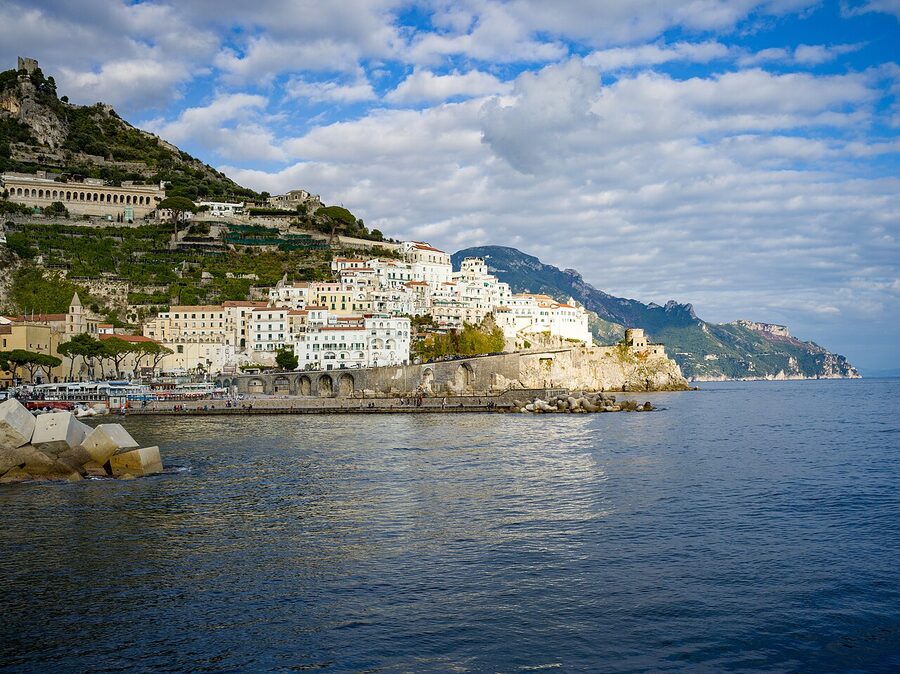
A seaside town and comune at 6m elevation, 5.97 km², 4,936 residents (2024). Province of Salerno. At the foot of Monte Cerreto (1,315m) on the southern flank of the Lattari Mountains. Capital of the Duchy of Amalfi from 839 to 1137, and at its medieval peak one of the four great Italian maritime republics (alongside Venice, Genoa, and Pisa). Patron saint Andrew the Apostle, whose relics have been kept in the crypt of the Duomo since 1208; saint’s day 30 November, with the full-body ostensione every year and the famous “Miracle of the Manna” on Saint Andrew’s Day. Since 1997, part of the UNESCO-listed Amalfi Coast world heritage site (site 830). Demonym: Amalfitano / Amalfitana.
Getting to Amalfi
The easiest approach is from Salerno by ferry (25 minutes, €9 one-way, hourly April-October). The ferry drops you at the Molo Foraneo right in the town centre, a three-minute walk from Piazza del Duomo. From Naples, a high-speed ferry via Capri takes about three hours and runs twice a day in summer; the scenic route is to take the Circumvesuviana train to Sorrento and then switch to the Sorrento-Amalfi ferry (75 minutes, €16 one-way).
By road, the SS163 Amalfitana — the coastal highway you have seen in a dozen car adverts — connects Amalfi with Sorrento (1 hour west) and Salerno (45 minutes east). Driving it is an experience; parking in Amalfi is not. The main public garage (Luna Rossa, at the Emiddio Cerulli car park) costs €5-8 per hour in summer and fills by 10:30am. If you are day-tripping, park in Salerno or Sorrento and take the ferry.
The SITA bus is the workhorse of Amalfi Coast transport. It runs from Sorrento through Positano to Amalfi, then continues east to Salerno. A single ticket is €2.70; a 24-hour pass is €10. In high season, the bus fills up at Sorrento and Positano and passes several stops without picking up; if you are getting on mid-route, you may wait for two or three buses. The route along the SS163 is ninety minutes of vertical switchback road with head-on truck encounters on every bend, which is either the highlight of the trip or a reason to take the ferry.
Coming from further afield: Naples (90 minutes by train to Salerno, then 25 minutes by ferry); Rome (2 hours to Naples by Frecciarossa, then as above); Sorrento (combine with Positano on the ferry route or SITA bus).
The Duomo di Sant’Andrea
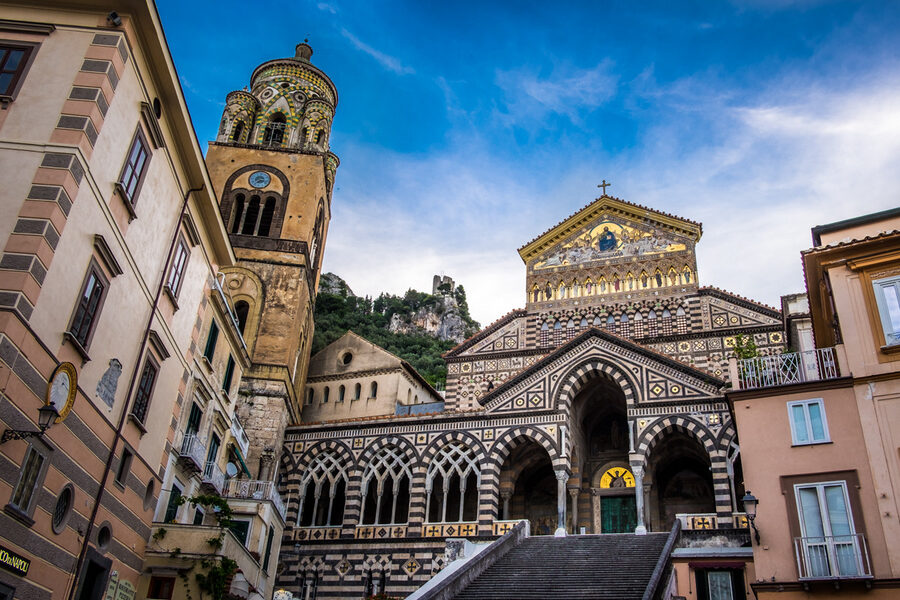
The Cathedral of Sant’Andrea stands at the head of the main piazza, reached by the famous 62-step staircase from the fountain below. The cathedral was founded in the 9th century; the main structure is 11th-13th century; the bronze doors were cast in Constantinople in 1066; the bell tower was built 1180-1276; the striped Arab-Norman facade was renewed in 1203; the baroque cornice and pediment are late 18th century. The complex is the single most architecturally layered building in southern Italy, and walking its four parts (cathedral, crypt, cloister, diocesan museum) is the single best introduction you can give yourself to Amalfi’s layered history.
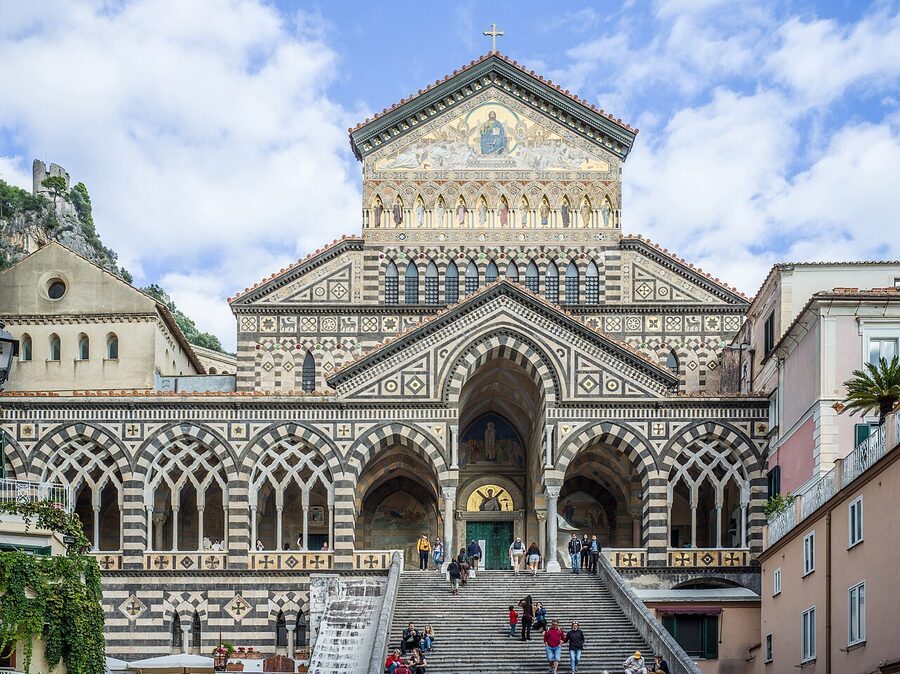
Inside, the nave is 18th-century baroque over the medieval bones — the Romanesque columns were encased in Baroque pilasters in the 1700s, which is regrettable in principle and quietly effective in practice. The real action is downstairs. The Crypt of Saint Andrew holds the apostle’s relics beneath a silver-plated altar by Domenico Fontana (1603) and was commissioned by Philip III of Spain, who was personally devoted to Andrew for reasons nobody quite knows. The relics came to Amalfi in 1208, stolen from Constantinople by Cardinal Pietro Capuano during the Fourth Crusade — a fact the Amalfitans describe as “translation” rather than theft, and which the Catholic Church still officially accepts. Saint Andrew’s head was transferred to the Vatican in 1462 when the Ottoman Turks threatened Rome, then returned to Amalfi by Pope Paul VI in 1964. The “miracle of the manna” is the annual liquid secretion that forms on the tomb on 30 November (and three other feast days); devout and sceptical visitors alike can see it. I have seen it once. It is clear liquid. I have no particular view on what it means.
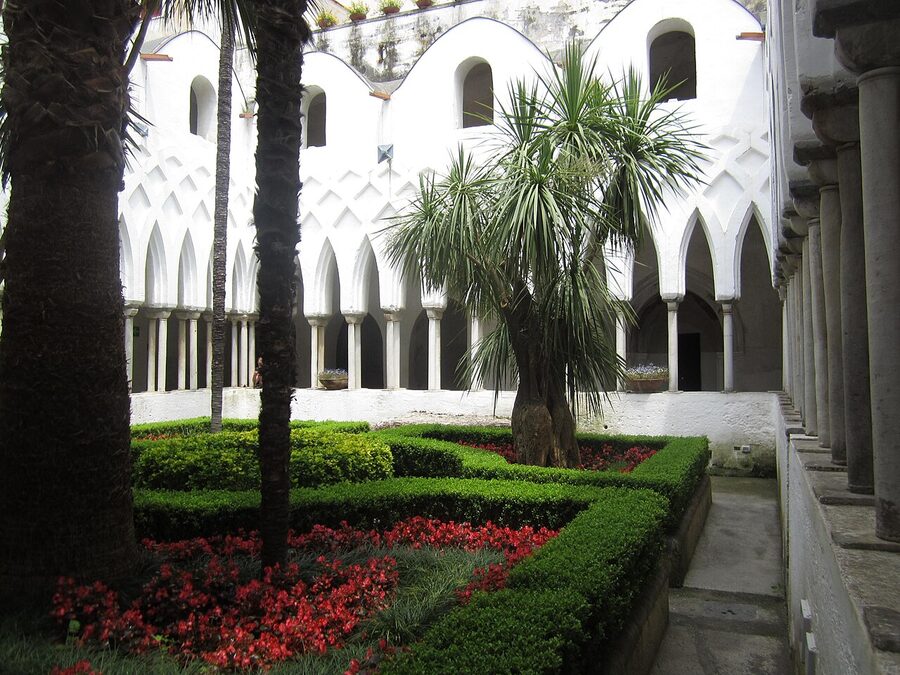
The Chiostro del Paradiso — the “Cloister of Paradise” — is attached to the cathedral’s left flank and was built in 1266 as a new cemetery for the city’s noble families. The Moorish pointed arches are a clear Arab-Norman reference; the palm trees planted in the central courtyard reinforce the visual lineage. Twenty-six interlaced arches on paired colonnette columns, remnants of Roman-era sarcophagi reused as grave monuments along the inner walls, fragments of medieval frescoes in the corner chapels, and a 14th-century Della Robbia-style Crucifixion inside a niche. Entry €3, and it closes from the cathedral ticket office. Allow forty minutes.
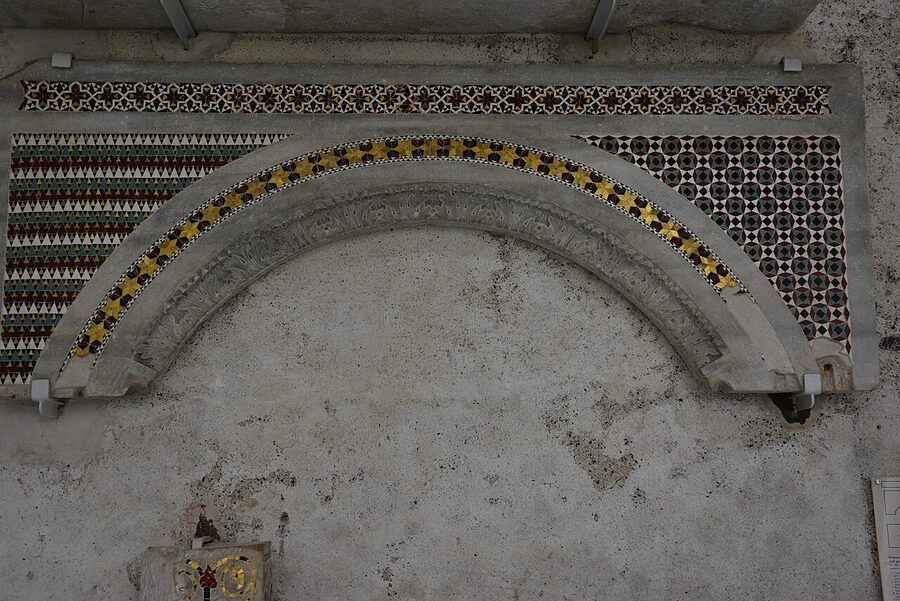
Completing the complex, the Diocesan Museum (inside the old Basilica del Crocifisso, which pre-dates the current Duomo) holds the republic’s surviving treasures: a 13th-century ivory relic-casket; processional crosses; illuminated liturgical manuscripts; and a remarkable carved wooden crucifix from around 1180. Entry is included with the Chiostro ticket. Sequence the visit: cloister, museum, crypt, cathedral upstairs, and out into the square.
The Maritime Republic — what Amalfi used to be
Three sentences of context that most visitors never quite get told. The Duchy of Amalfi was an autonomous maritime state that flourished from roughly 839 AD — when it broke away from the Byzantine Duchy of Naples — until 1137, when the Pisan fleet sacked the harbour. At its peak, around the turn of the eleventh century, Amalfi had 70,000 to 80,000 residents, Mediterranean-wide trading consulates (including in Cairo, Tunis, Acre, Antioch, and Constantinople), and a merchant fleet that outweighed those of Pisa and Venice combined. It invented the maritime compass, or at least refined the Chinese original for open-sea navigation; published the Tabula Amalphitana in the 11th century, the first written maritime code in Italy and the template for later Venetian and Genoese codes; and minted the tarì gold coin that was the de-facto currency of the Mediterranean trade basin for three centuries.
What ended it was not a battle. The Pisans sacked the harbour in 1137, but the city recovered. The catastrophic blow was the storm of 25 November 1343. A cyclonic Mediterranean storm — the worst recorded in regional history — tore away most of the waterfront, drowned the lower city, destroyed the harbour fortifications, and sent half the surviving fleet to the bottom. The city never recovered the population or the trade. By 1400 the residents had fallen to about 5,000 — where they more or less still are now — and the political and economic centre of the Campania coast moved permanently to Naples.
What you see of the republic in the modern town: the Arsenale della Repubblica on the waterfront (two surviving Romanesque vaulted halls where galleys were built, now a museum with scale models and original shipbuilding tools, €4 entry, 9-18, closed Wednesdays); the Museo della Carta in the Valle delle Ferriere up the gorge behind town (which preserves the paper-making tradition Amalfi inherited from Arab intermediaries in the 12th century and turned into a four-hundred-year industry, €4 entry, with working demonstrations on a 15th-century wooden press); and most of the fabric of the cathedral complex.
What you don’t see, because the storm took it: the original harbour moles, the lower city, two-thirds of the noble palazzi, the main merchant warehouse quarter, and most of the eastern walls. The town you walk through today is the upper half of the one that existed in 1343. This is the other thing that makes the current street plan feel slightly out of scale.
Walking the town
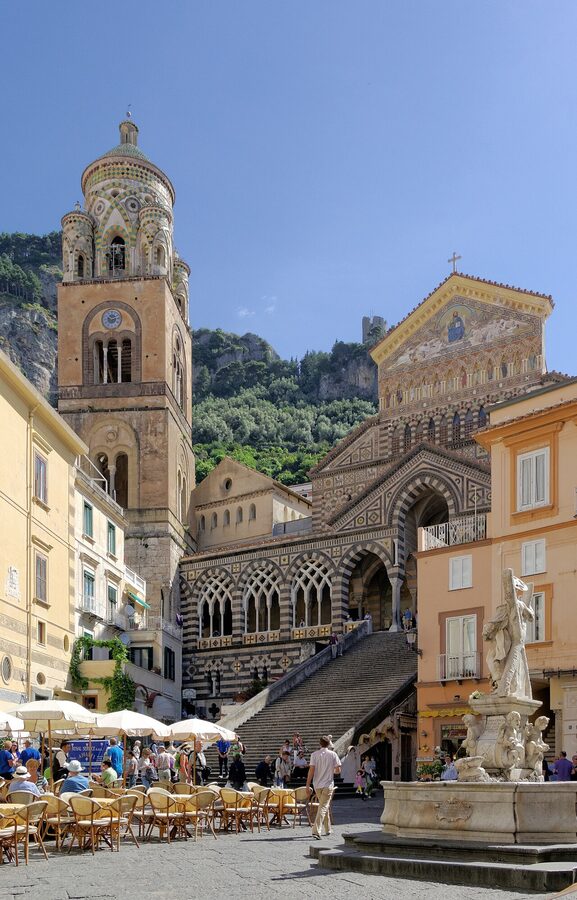
Amalfi is small enough to walk end-to-end in seven minutes and dense enough to spend two days in. Start at Piazza del Duomo with a coffee at Pasticceria Andrea Pansa (founded 1830, the oldest café on the Amalfi Coast, their delizia al limone — a dome of sponge filled with lemon pastry cream covered in white chocolate glaze — is the reference version, €3.50) on the north side of the square. Cover the Duomo complex (above, two hours). Then walk the main pedestrian street, Via Lorenzo d’Amalfi, north from the piazza — it is the only real shopping street, runs about 400 metres, and ends at a small square under the cliff where a stream still runs open-air through a stone channel.
From there, a signposted uphill path — the Sentiero delle Ferriere — goes up the gorge through lemon groves and past the ruins of 13th-century iron foundries into the Valle delle Ferriere Nature Reserve. The valley is a protected microclimate where the rare Woodwardia radicans giant fern survives — the same fern was widespread across the Mediterranean in the Tertiary period, and Valle delle Ferriere is one of about three remaining sites where it still grows. The walk to the waterfall (about 90 minutes one way) is the best half-day hike on the Amalfi Coast. Bring water; the first 30 minutes are steep, the rest is gradual. Paper Museum is at the bottom of the gorge trail.
Back in the town, the second walking axis goes west from the Piazza del Duomo along Via Capuano, which leads out to the Arsenale della Repubblica and the Molo Foraneo (the ferry dock). The sea walk continues west past the hotel district — the Luna Convento (a 13th-century Dominican convent converted to a hotel in 1822, where Henrik Ibsen finished writing A Doll’s House in 1879, still operating) and the Grand Hotel Convento (another converted monastery, Cappuccini, 1880s) — and ends at the natural sea rock called the Scoglio del Capo which is where the Amalfitans swim when they want to avoid the main beach. The main beach itself, Spiaggia Grande di Amalfi, is the narrow pebble strip immediately in front of the town; free in the middle, paid lidi on either side. Small, crowded in August, pleasant in June and September.
Third axis: the upward climb. Stairs go up the mountainside on both sides of the town. The easier and more rewarding one goes up from the Piazza Municipio through the Torre dello Ziro ruins to the village of Pogerola (two hours, about 500m of ascent) — this is the town’s old hill-refuge settlement, where the Amalfitans retreated during Saracen raids. Fantastic view back down to Amalfi from about two-thirds up.
Food and what to eat where
Amalfi Coast food is its own cuisine, shaped by the lemon groves (the sfusato amalfitano lemon is a DOP-protected variety), the mountain herbs from the Lattari, the abundance of fresh fish, the Arab-inherited pastry tradition, and four centuries of being on the Naples-Salerno trade route. The specific dishes to look for in Amalfi:
Scialatielli ai frutti di mare. Thick, slightly chewy, short-cut pasta with clams, mussels, prawns, calamari, cherry tomatoes, and garlic in white wine. The house pasta of the Amalfi Coast. Ristorante La Caravella (Via Matteo Camera 12, Michelin one-star since 1966 — the first restaurant in southern Italy to get a star — tasting menu €110, à la carte scialatielli €28) is the reference version; Marina Grande (Viale della Regione 4, €45 for a full meal, on the beach) is the solid mid-range alternative.
Delizia al limone. The Amalfi lemon dessert. A dome of lemon-soaked sponge filled with lemon pastry cream, glazed with white chocolate and lemon cream. Invented at Pasticceria Pansa in the 1960s, copied throughout the coast since. Eat the original at Pansa in Piazza Duomo; compare with Sal De Riso in Minori (the pastry chef now exports the technique internationally, his version uses a slightly denser sponge, shop at Via Roma 80 Minori).
Colatura di alici di Cetara. A liquid garum-like anchovy extract that is the great Amalfi Coast condiment. Drizzle on cold pasta, spaghetti, boiled vegetables, or boiled potatoes. Made in the fishing village of Cetara (20 minutes east); the best producer is Nettuno, sold in hardware-store shops in Amalfi and Cetara for €15-20 per 100ml bottle. It is a better souvenir than limoncello.
Ndunderi. A medieval ricotta-and-flour dumpling that historians say was the original ancestor of modern gnocchi, first described in a 10th-century monastic document from Minori. Best at Trattoria Il Buco (Via Torre 2, €25, off Piazza del Duomo) in town; or at Ristorante Giardiniello in nearby Minori if you are day-tripping.
For wine: Tramonti, an inland valley 20 minutes north of Amalfi in the Lattari Mountains, produces the Amalfi Coast’s best reds — Tintore-based, ageable, almost unknown outside the region. San Francesco and Giuseppe Apicella are the reference producers. Either restaurant wine list will have them; they also do cellar tours with 48 hours’ notice.
For limoncello: don’t buy the tourist-label versions on Via Lorenzo d’Amalfi. The authentic Amalfi limoncello comes from four small producers: Antichi Sapori d’Amalfi (Salita dei Curiali 3), Amalfi Lemon Experience (Piazza dei Dogi — they do a 90-minute farm tour up in the lemon groves above town, €30 per person), Limoncello di Sorrento (chain, but decent), and Profumi della Costiera (the premium one, uses only sfusato amalfitano peel, €25 per 500ml).
Where to stay
Four tiers. At the top, the Grand Hotel Convento di Amalfi (former Cappuccini convent, 1212 AD, converted 1880s, cliffside rooms with Mediterranean view, from €600 in peak season) is where visiting dignitaries stay — including various US vice-presidents and an assortment of UK royals. The Hotel Luna Convento (same era, same conversion story, cheaper, around €400) is the Ibsen-era classic. The Santa Caterina just outside town (€700-1200, family-owned since 1880, grand dame of Amalfi hotels) is the other luxury choice.
Mid-range: Hotel Marina Riviera (Via P. Comite 19, town edge, €250-350, sea-facing balconies, two Michelin-starred restaurants on site); Hotel Amalfi (Vico dei Pastai 3, town centre, €180-250, small, quiet, proper Italian-family-run hospitality); Residenza del Duca (Via Mastalo II Duca 3, €150-220, four rooms only, a genuine 17th-century palazzo).
Budget, where accommodation is genuinely hard to find: Sant’Andrea B&B (Salita Cirillo 2, €90-120, three rooms, run by an elderly Amalfitan couple); Villa Lara (Via delle Cartiere 1, €100-160, on the edge of town with a garden, nine rooms); the A’ Scalinatella Hostel in Atrani immediately next door (Piazza Umberto 6, €30-45 dormitory).
A fourth option worth knowing: Atrani, the tiny village literally adjacent to Amalfi (you walk between them in seven minutes along the shore), has about five B&Bs, is far quieter than Amalfi centre, and offers genuinely local accommodation at Amalfi-adjacent prices. The village has 800 residents, the smallest Italian commune by area outside San Marino, and the best breakfast coffee in the region at Caffè l’Arco on Piazza Umberto.
Day trips from Amalfi
Amalfi is the natural base for the central Amalfi Coast, so I would structure your days around what is reachable from here.
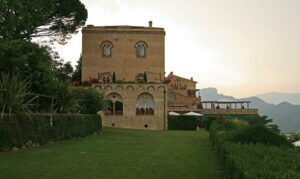
Ravello, 25 minutes by SITA bus up the mountain, is the single most important day trip from Amalfi. It is the clifftop town with Villa Rufolo, Villa Cimbrone, the Ravello Festival, and arguably the best single view on the Amalfi Coast. Allow a full day; consider an overnight if you can book the festival.
Positano, 40 minutes west by bus or 30 minutes by ferry. The other famous Amalfi Coast town; much more commercialised, but genuinely beautiful, and the SS163 drive between the two is worth the trip in itself. Half-day or full day.
Minori and Maiori, 10 and 15 minutes east by bus respectively. Working Amalfi Coast towns, quieter and cheaper than Amalfi proper, with serious pastry tradition (Sal De Riso is at Minori) and a good Roman archaeological site at Minori (a 1st-century imperial villa with mosaics, €4). Half-day pairing.
Cetara, 25 minutes east by bus. The colatura di alici village. Go for lunch at Al Convento or Acqua Pazza (both serve colatura in multiple ways) and to watch the working fleet bring in the anchovy catch around noon. Half-day.
Paestum, 75 minutes south by bus or train via Salerno. The Greek archaeological site with three intact Doric temples, usually done as a day trip from Salerno but possible from Amalfi. Full day.
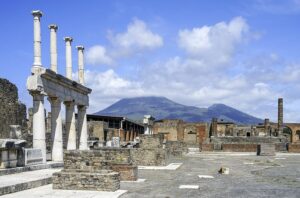
Pompeii, 75 minutes northwest by combined bus-train via Vico Equense. Full day. The natural archaeological counterweight to Amalfi’s medieval focus.
Capri, 90 minutes by ferry (direct in summer, via Sorrento off-season). Full day. Book the ferry in advance in August.
When to visit
Late April through mid-June and mid-September through mid-October are the right windows. The SS163 traffic is bearable; the SITA bus has empty seats; the Duomo is not crowded; the sea is swimmable (June is the earliest reliable month; October the last).
July and August are full-on. Expect the main piazza to be shoulder-to-shoulder by 11am, the SITA bus to pass several stops without picking up, the Duomo to have a queue for the cathedral itself and another for the cloister. Hotel prices in August can be triple their May equivalents. The upside: longer days, fewer restaurants closed, and the Regata delle Repubbliche Marinare (the four-republics historic rowing regatta) comes to Amalfi once every four years on the first Sunday of June, which is a genuine sight.
Saint Andrew’s Day, 30 November, is the town’s biggest festival — the full-body ostensione of the saint and the famous “miracle of the manna.” Book accommodation six months ahead if you want to be here for it. The lesser festival is 27 June (an earlier historical feast commemorating the successful defence of the town against Barbarossa’s fleet in 1544, for which Saint Andrew was credited).
Winter (November through March, excluding Saint Andrew’s Day) is quiet. About two-thirds of the restaurants close for the low season; the ferry runs a reduced schedule; the nature reserve is deserted. Hotels drop to about 40% of peak prices. The town is at its most compact and residential, which is either the best or the worst version depending on what you came for.
Before you go
Amalfi is not the prettiest town on the Amalfi Coast. Positano is prettier. Ravello has the better view. Cetara has better fish. Minori has better pastry. What Amalfi has is weight — the sense of a place that used to be four times its current size, that ran a Mediterranean trading empire, that has gotten less famous instead of more over the last nine hundred years, and that carries the losses without fuss. The Duomo and the Chiostro del Paradiso are the two buildings that hold that weight most clearly. If you go in for twenty minutes with a coffee and a pastry and leave, you miss the point. Stay a full day. Stay two if you can.
My single recommendation: do the full Paper Museum + Valle delle Ferriere walk on a morning when you have cleared the rest of the day. That is the Amalfi that is not on anyone’s Instagram, and it is the better half.
For wider context, see the Campania hub on this site. For the adjacent Amalfi Coast towns, see the Positano and Ravello guides. For Italy’s other maritime republic cities, see Genoa on this site (Pisa and Venice to follow).

.jpeg)


_WLM23_008.jpg)
